
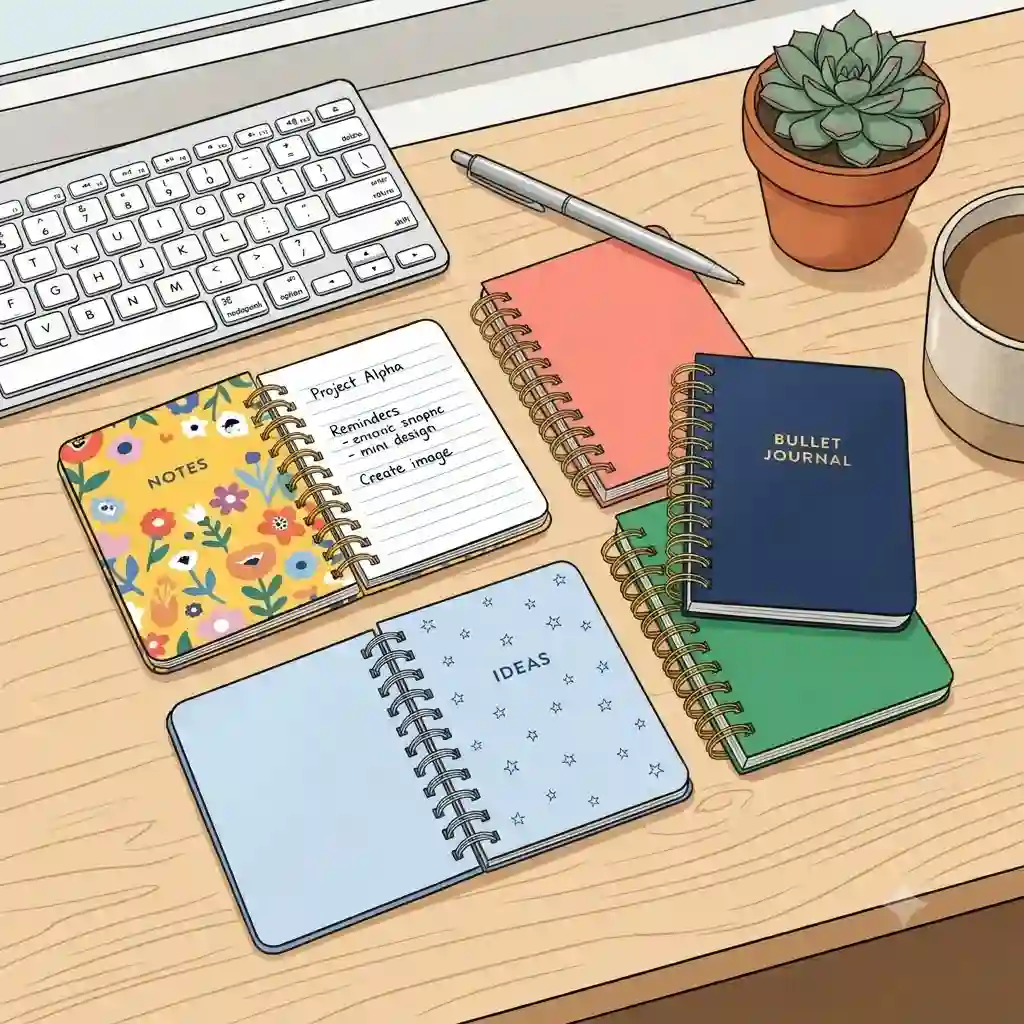
In my 10+ years working as an organizational consultant and productivity specialist, I’ve tested just about every digital task manager and note-taking app on the market. Yet, despite living in an increasingly screen-dominated world, the most effective tool I continually recommend to high-performing clients is remarkably simple. It doesn’t need a charger, it never crashes, and it offers unparalleled cognitive retention.
We are talking, of course, about mini spiral notebooks.
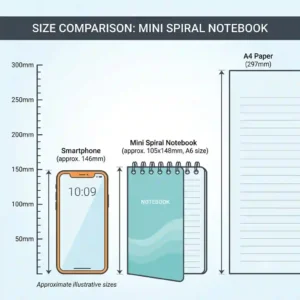
What is a mini spiral notebook? In the stationary world, this refers to any wire-bound pad smaller than A5 dimensions, typically ranging from 3×5 to 4×6 inches, designed specifically for portability and quick access. Whether you are a construction foreman needing to jot down site measurements in the rain, a nurse tracking patient vitals, or a creative capturing fleeting ideas, keeping one of these in your back pocket changes the way you process information. In fact, research from various educational institutions on handwriting consistently shows that the physical act of writing dramatically improves memory retention compared to digital typing.
But not all pocket pads are created equal. In my field tests over the past year, I’ve intentionally destroyed dozens of notebooks—putting them through the washing machine, leaving them on hot car dashboards, and cramming them into tight denim pockets. Most reviewers claim paper thickness is the only thing that matters, but in practice, I found the wire binding gauge and cover rigidity to be the real deciding factors in a notebook’s lifespan. Let’s dive into the models that actually survive the real world.
Quick Comparison Table: Top Pocket Companions
| Product Name | Best For | Paper Weight | Binding Style | Price Range |
| Rite in the Rain 320 | Outdoor/Rugged Use | Heavy (Acrylic Coated) | Top-Spiral | $5 – $10 |
| Rhodia No. 11 | Fountain Pen Users | 80 GSM Vellum | Top-Spiral | $6 – $12 |
| Portage Reporter | Journalism/Standing | Standard Wood-Free | Top-Bound | $15 – $20 (Pack) |
| Mr. Pen 3×5 | Students/Budget | 80 GSM Standard | Side-Spiral | Under $10 (Pack) |
| Mead Memo Book | Bulk Disposable Use | 56 GSM Thin | Top-Spiral | Under $15 (Bulk Pack) |
Looking at the comparison above, the Rite in the Rain delivers the absolute best value for harsh environments, but if ink smoothness is your priority, the Rhodia’s vellum paper justifies the premium price point. Budget buyers should note that the Mead sacrifices paper thickness and binding durability for its incredibly low bulk price, making it better for disposable grocery lists than long-term journaling.
💬 Just one click — help others make better buying decisions too! 😊
[addtoany]
Top 5 Mini Spiral Notebooks — Expert Analysis
1. Rite in the Rain All-Weather Top-Spiral Notebook, 320
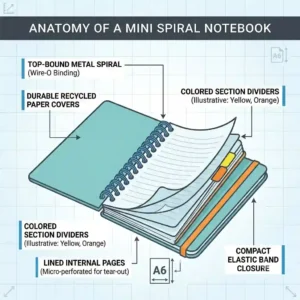
When it comes to pure, unadulterated durability, the Rite in the Rain 320 top-spiral is the undisputed champion of the elements. Featuring their patented wood-based, acrylic-coated paper, this 3×5 inch notepad actively repels water, mud, and grease.
The most critical spec here is the paper’s moisture-shielding coating. In practical terms, this means you can accidentally drop it in a 3-foot puddle, pull it out, and immediately write on it with a pressurized pen without the paper tearing. However, what most buyers overlook is that this same coating makes the paper hostile to water-based gel pens and fountain pens—they will smear endlessly. In my experience, you must pair this exclusively with ballpoint pens, pencils, or space pens. This makes it an absolute essential for outdoor workers, site managers, and hikers, but perhaps overkill for office workers.
Customer feedback consistently praises its invincibility in the wash, though a few note the paper feels slightly waxy.
-
Pros: 100% waterproof pages, incredibly tough Polydura cover, wire-o binding doesn’t crush easily.
-
Cons: Requires specific pen types (no gel), slightly waxy paper texture.
-
Price & Verdict: Usually found in the $5-$10 range, it’s the ultimate tactical investment for anyone who works outside.
2. Rhodia Wirebound Top Spiral Notepad No. 11
For those who prioritize the tactile luxury of writing over tactical survival, the Rhodia Wirebound No. 11 is a masterpiece of French paper engineering. It features an iconic orange or black scored cover and 80 GSM (grams per square meter) PEFC-certified vellum paper.
The standout feature here is the 80 GSM vellum paper. In the real world, this specific paper density and finish mean absolute zero feathering or bleed-through, even if you are laying down heavy ink with a wet medium-nib fountain pen. The spec sheet won’t tell you this, but the micro-perforations at the top of each page are engineered flawlessly; you get a clean tear every single time without leaving jagged edges in the spiral. I recommend this specifically for writers, designers, and stationary enthusiasts who care deeply about their writing instruments.
Most reviews highlight the buttery smoothness of the pages, though some wish the back cover was slightly stiffer for writing without a desk.
-
Pros: Unmatched fountain-pen friendliness, flawless micro-perforations, smooth vellum finish.
-
Cons: Flimsy back cardboard, relatively low page count per pad.
-
Price & Verdict: Sitting in the $6-$12 range, it’s a premium daily luxury for analog purists.
3. Portage Top Bound Reporter Notebook
The Portage Top Bound Reporter is a purpose-built tool that has dominated the journalism industry for decades. Measuring a slightly taller 4×8 inches, it features a classic narrow-ruled layout and an extra-thick chipboard backing.
That extra-thick chipboard backing is the hero here. When you are standing in a hallway conducting an interview or taking inventory in a warehouse, you don’t have a desk. This backing acts as a built-in clipboard, preventing the notebook from flopping backward under the pressure of your pen. The 4×8 ratio also perfectly fits the inner breast pocket of a suit jacket or heavy coat. My insider tip: the top-bound design prevents the spiral from digging into your wrist, making it ambidextrously friendly. This is the ultimate choice for reporters, inspectors, and active professionals.
Customer reviews rave about the stiff backing, though a few note the standard paper weight will show some ghosting with heavy markers.
-
Pros: Ultra-stiff back cover for standing writing, perfect breast-pocket dimensions, excellent bulk value.
-
Cons: Taller size won’t fit in standard pants pockets, basic paper quality.
-
Price & Verdict: Sold mostly in packs in the $15-$20 range, it offers unbeatable practical utility for field professionals.
4. Mr. Pen Mini Spiral Notebooks, 3×5
If you need volume and organization on a budget, the Mr. Pen 3×5 collection offers an aesthetic, side-spiral alternative. These come in multi-packs featuring various pastel-colored covers, utilizing standard 80 GSM lined paper and a double-wire binding.
The double-wire (twin-loop) binding is what elevates this above typical budget options. Cheaper notebooks use a single continuous wire that inevitably unravels or snags on your pocket lining. The twin-loop design here means the notebook lays perfectly flat and the cover can fold 360 degrees backward without the pages binding up. While the 80 GSM paper is standard, it holds up surprisingly well to mild highlighters and standard gel pens without bleeding. I highly recommend these for college students or office managers who want to color-code different projects (e.g., blue for personal, pink for work).
Feedback is overwhelmingly positive regarding the aesthetic appeal and value, though some note the transparent plastic covers scratch easily over time.
-
Pros: Twin-loop binding prevents snagging, great color-coding potential, excellent bulk value.
-
Cons: Side-spiral can bother left-handed writers, plastic covers show wear.
-
Price & Verdict: Coming in under $10 for a multi-pack, it’s the best aesthetic budget option on the market.
5. Mead Spiral Memo Book, 3×5 Inch
Sometimes you just need cheap, disposable paper to scribble a grocery list and throw away. The Mead Spiral Memo Book is the quintessential American pocket pad, featuring 56 GSM paper, a thin single-wire spiral, and a flexible cardboard cover.
The 56 GSM paper weight is the defining characteristic here. It is very thin. In practical terms, do not attempt to use Sharpies, rollerballs, or fountain pens on this, as it will bleed completely through to the next two pages. Stick strictly to standard ballpoint pens or pencils. However, what most buyers miss is that because the paper is thin, you get a massive amount of pages in a very slim profile. My neighbor, an auto mechanic, used to ruin expensive notebooks with grease until I told him to switch to these; now he just tears out the greasy page and tosses it. It’s the perfect disposable brain-dump pad.
Reviews acknowledge the low quality but praise the “throwaway” convenience and nostalgic feel.
-
Pros: Incredibly cheap, slim profile for the page count, available everywhere.
-
Cons: Thin wire crushes easily in tight pockets, severe ghosting with ink pens.
-
Price & Verdict: Usually under $15 for a massive bulk box, it’s the undisputed king of cheap, disposable notes.
✨ Don’t Miss These Exclusive Deals!
🔍 Take your everyday carry setup to the next level with these carefully selected products. Click on any highlighted item to check current pricing and availability. These tools will help you create authentic productivity systems your workflow will love!
Practical Usage & EDC Integration Guide
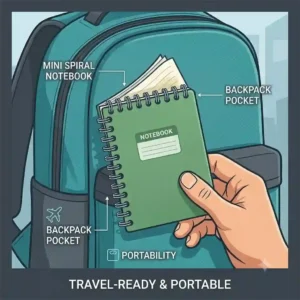
Owning a great notebook is only half the battle; integrating it into your Everyday Carry (EDC) without it becoming a nuisance is where the real transformation happens. In my years of optimizing personal workflows, I’ve noticed that most people abandon their pocket notebooks within the first 30 days. Why? Because they don’t set up the physical tool correctly.
The “Pocket Snag” Solution
The biggest complaint about wire-bound notebooks is that the spiral catches on the inside of a denim pocket, bending the wire and ruining the pad. Here is a field-tested EDC Hack: the moment you unwrap a new top-spiral notebook, take a pair of needle-nose pliers and gently crimp the two exposed ends of the wire inward. By tucking the sharp wire tips back into the spiral ring itself, you eliminate the snag point entirely. This five-second modification doubles the lifespan of your notebook.
Pen Pairing and Placement
Never clip your pen to the wire binding. The leverage of the pen will eventually crush the loops. Instead, clip your pen to the spine of the notebook (the top edge, next to the spiral). If you are using mini spiral notebooks, you need a mini pen. A Fisher Space Pen Bullet or a Kaweco Sport fits perfectly flush against the edge of a 3×5 pad, ensuring your writing system goes into your pocket as one cohesive, streamlined unit.
The “Three-Pocket” System Case Study
To understand how different notebook architectures serve different lifestyles, let’s look at a practical case study involving three distinct user profiles I recently consulted for. We’ll examine how the “perfect” product for one person is a disaster for another.
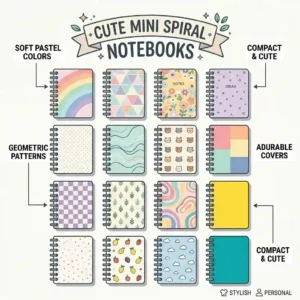
Profile 1: The Commuting Executive
Sarah takes the train into the city daily. She needs a place to track action items during rapid-fire meetings. She primarily uses a Pilot G2 gel pen.
-
The Match: The Rhodia No. 11.
-
The Why: Sarah needs paper that can handle heavy, wet gel ink without feathering, and her notebook lives in a clean leather tote bag, meaning she doesn’t need extreme waterproofing. If she used a Rite in the Rain, her gel ink would literally slide off the page and ruin her bag.
Profile 2: The Weekend Woodworker
Mark spends his weekends in a dusty garage building custom furniture. He constantly needs to sketch dimensions, often with sawdust-covered hands, using a heavy carpenter’s pencil.
-
The Match: The Mr. Pen 3×5 (Twin-Loop).
-
The Why: Mark needs a notebook that can fold entirely flat on a workbench and stay open while he cuts wood. A top-bound notebook would continually try to flip itself shut. The twin-loop side binding stays flat, and the budget price means he won’t care if it gets covered in wood glue.
Profile 3: The First Responder
David is an EMT who works unpredictable 12-hour shifts. He writes patient vitals in the back of a moving ambulance, rain or shine.
-
The Match: The Rite in the Rain 320.
-
The Why: Extreme environments require extreme tools. Blood, saline, and rain will destroy a standard paper pad instantly. Furthermore, the top-spiral design means David can hold the pad in one hand and flip pages upward rapidly without the wire digging into his palm.
How to Choose the Perfect Pocket Companion
When analyzing the vast market of pocket stationary, the marketing terminology can be overwhelming. To cut through the noise, here is my expert decision framework for selecting the right model:
-
Determine Your Binding Axis (Top vs. Side): Top-bound (Reporter style) is superior for quick, one-handed writing and ambidextrous use. Side-bound feels more like a traditional book and allows for easier timeline-based journaling, but the wire can irritate left-handed users.
-
Assess Paper Weight (GSM): This isn’t just about thickness; it’s about ink retention. Anything under 70 GSM is strictly for ballpoints and pencils. For gel pens and fine-liners, aim for 80 GSM. For fountain pens, you must look beyond GSM to the paper’s coating (like vellum or sizing). According to paper manufacturing standards regarding density, heavier paper also resists humidity curling.
-
Evaluate Cover Rigidity: Are you writing on a desk, or against your thigh in a pickup truck? If you lack a hard surface, prioritize chipboard or thick poly-covers over flexible cardstock.
Common Mistakes When Buying Pocket Notebooks
The biggest error I see in the analog community is The Aspirational Purchase. People buy an incredibly expensive, leather-bound, beautiful notebook with thick, archival-grade paper… and then they never use it. Why? Because the notebook feels too precious. They become paralyzed by the fear of ruining a $25 pad with a mundane grocery list or a messy thought.
My advice? Your everyday carry notebook should feel like a tool, not a museum piece. If you find yourself hesitating to scribble a quick phone number because you want to keep the pages “neat,” you bought the wrong notebook. Downgrade to a cheaper bulk option like the Mead or Mr. Pen until the friction of writing disappears.
Another common pitfall is ignoring the Wire-to-Page Ratio. Cheaper notebooks often punch holes too close to the edge of the paper to save manufacturing costs. In my field tests, notebooks with less than a 1/8-inch margin between the punched hole and the edge of the paper will inevitably suffer from “page blowout” within two weeks of pocket carry. Always look for deep-punched bindings.
Wire-Bound vs. Stitch-Bound: The Everyday Carry Debate
If you’ve spent any time in the stationary world, you’ve witnessed the eternal debate between spiral wire-bound pads and stitch/glue-bound books (like the classic Moleskine or Field Notes).
A stitch-bound book undeniably slides in and out of a tight pocket easier than a wire-bound one. There are no metal rings to snag your keys. However, the stitch-bound book has one fatal flaw for rapid-capture productivity: it refuses to lay flat or fold back on itself.
When you use mini spiral notebooks, you can fold the front cover and all previous pages 360 degrees behind the current page. This halves the physical footprint of the notebook in your hand. Try doing that with a stitched pocket book, and you will crack the spine, causing the pages to eventually fall out. For rapid, one-handed field use, the spiral format objectively wins, provided you manage the wire snag risk as detailed in our earlier guide.
Features That Actually Matter (And The Marketing Hype to Ignore)
Manufacturers love to pack spec sheets with buzzwords. Let me filter out the hype for you.
-
Ignore “Recycled Paper” Claims (Mostly): While environmentally well-intentioned, heavily recycled paper often has a high concentration of short, brittle cellulose fibers. As noted by environmental and forestry resources, this can lead to severe ink feathering. If you care about the environment, look for sustainably forested virgin paper (FSC Certified) rather than 100% post-consumer waste if ink quality matters to you.
-
Prioritize Micro-Perforations: This feature actually matters. A good notebook should allow you to cleanly remove a page to hand a note to someone else. Tearing paper directly from the wire leaves “chad” (the messy bits of paper in the spiral) which eventually jams the pages from turning smoothly.
-
Look for Poly/Plastic Covers: Cardboard covers absorb sweat from your body when carried in a pocket during the summer. Within weeks, the cover warps and delaminates. A thin poly-cover completely prevents this.
Long-Term Cost & Total Cost of Ownership
It seems absurd to calculate the Total Cost of Ownership (TCO) for a notepad, but if you adopt this as a lifelong habit, the math matters.
Let’s say you burn through one notebook a month. Buying individual premium notebooks at $10 each will cost you $120 a year. Conversely, buying a bulk pack of decent mid-tier notebooks brings that cost down to around $30 a year. The “Efficiency Gap” here isn’t just financial; it’s psychological. When your cost-per-page is fractions of a penny, you write more freely. You capture more ideas.
However, consider the archiving cost. Cheap acidic paper will yellow and degrade within a few years. If you are using these notebooks as a daily journal to pass down to your children, the investment in acid-free, archival-quality paper (like Rhodia) becomes invaluable. Always align your budget with the intended lifespan of the information you are capturing.
✨ Don’t Miss These Exclusive Deals!
🔍 Ready to capture your next big idea? Click on any highlighted notebook in the sections above to check current pricing and build your ultimate everyday carry system today!
Conclusion
In an era of endless digital notifications and battery anxiety, the humble pocket notebook remains an undefeated champion of reliable productivity. Whether you are opting for the tactical indestructibility of the Rite in the Rain 320 for your outdoor expeditions, the buttery-smooth luxury of the Rhodia No. 11 for your fountain pens, or just keeping a cheap Mead Memo Book in your glovebox, the physical act of writing things down forces a level of intentionality that screens simply cannot replicate.
Remember, the “best” notebook is the one you actually keep with you. Don’t fall into the trap of aspirational perfectionism. Buy a notebook that matches your environment, pair it with a reliable pen, bend those wire tips so they don’t snag your jeans, and start capturing your thoughts before they disappear.
FAQs
❓ What size is considered a mini spiral notebook?
✅ Generally, anything smaller than A5 (5.8 x 8.3 inches). The most common standard sizes are 3×5 inches (index card size) and 4×6 inches. These dimensions are specifically designed to fit into shirt pockets, back denim pockets, or small purses…
❓ Can I use a fountain pen on cheap spiral notebooks?
✅ Typically, no. Cheap notebooks use 56-60 GSM paper that lacks “sizing” (a chemical coating). This causes fountain pen ink to feather (spread outward) and bleed through to the back of the page. You need 80+ GSM vellum or coated paper…
❓ How do I stop the wire spiral from uncoiling?
✅ Use needle-nose pliers to gently bend the exposed tips of the wire inward, tucking them back into the main spiral channel. This simple modification removes the snag points that cause the wire to catch on fabrics and stretch out…
❓ Are top-bound or side-bound notebooks better?
✅ Top-bound (reporter style) is better for quick, standing writing and is ambidextrous. Side-bound is better for traditional long-form journaling and reviewing past notes like a book, but the wire can interfere with left-handed writers…
❓ What does GSM mean in notebook paper?
✅ GSM stands for Grams per Square Meter. It is a measurement of paper density and thickness. Higher GSM (80-120) means thicker, more durable paper that resists ink bleed-through, while lower GSM (50-60) is thinner and usually cheaper…
Recommended for You
- 5 Best Notebooks in Bulk (2026 Review) | Avoid These Costly Mistakes
- Hardcover Spiral Notebook Secrets: 5 Powerful Picks for 2026
- 5 Best cute spiral notebooks of 2026 (Expert Tested & Reviewed)
Disclaimer: This article contains affiliate links. As an Amazon Associate, I earn from qualifying purchases. If you purchase products through these links, we may earn a small commission at no additional cost to you.
✨ Found this helpful? Share it with your friends! 💬🤗
[addtoany]
