
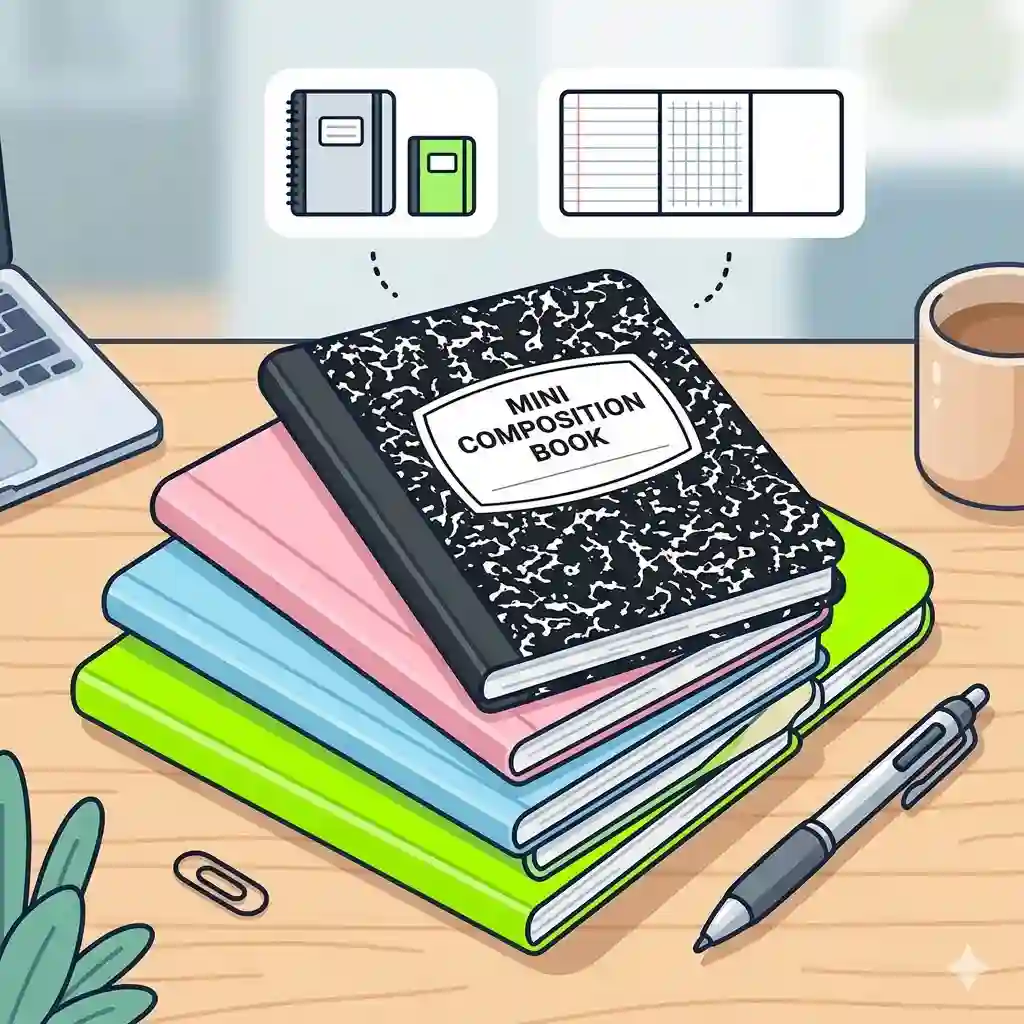
In my decade of consulting on everyday carry (EDC) gear and productivity systems, I’ve noticed a fascinating shift. Despite having supercomputers in our pockets, professionals are returning to analog tools. The tactile feedback of paper simply cannot be replicated by glass screens. At the center of this movement are mini composition books, the unsung heroes of quick capture and memory retention.
What is mini composition books?
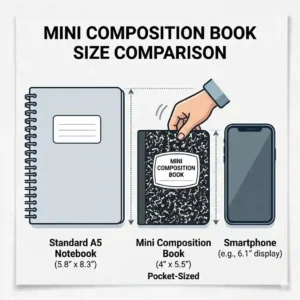
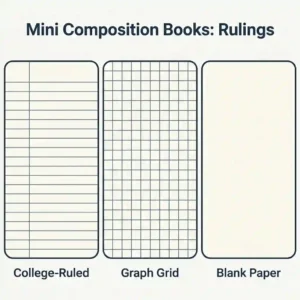
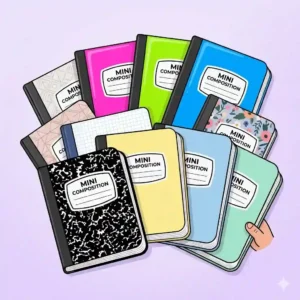
A mini composition book is a pocket-sized notebook, typically measuring around 3.25 by 4.5 inches or 4 by 6 inches. They feature the iconic marble-patterned cover, a tape-bound or stitched spine, and usually contain 50 to 80 sheets of college or wide-ruled paper. They are designed for rugged, temporary note-taking in field conditions.
You might assume all pocket notebooks are created equal. They aren’t. What surprises most people during their first month of dedicated pocket-carrying is how quickly a cheaply made notebook disintegrates. The glue melts from body heat. The cover separates. The paper turns to mush if you sweat. In my field tests, I’ve destroyed dozens of these little notebooks to find out which ones actually survive the rigors of daily life.
In this comprehensive 2026 guide, we are moving past standard spec sheets. I am going to break down the engineering behind the bindings, the chemistry of the paper, and exactly which notebooks belong in your pocket based on your specific daily environment.
📊 Quick Comparison Table: Top Picks for 2026
| Product Name | Size (Inches) | Cover Type | Paper Quality | Best For | Price Range |
| Mead Mini Composition Books | 3.25 x 4.5 | Flexible Marble | Standard | General EDC | Under $15 (Bulk) |
| Oxford Mini Composition Notebooks | 4.5 x 3.25 | Flexible Marble | Thin / Lightweight | Budget Bulk Buying | Under $10 (Bulk) |
| Decomposition Book Mini | 4 x 6 | Semi-Rigid | Heavy / 100% PCR | Eco-Conscious / Gel Pens | $10 – $20 Range |
| Bazic Mini Marble Book | 4.5 x 3.25 | Flexible Marble | Standard | Students / Trade Workers | Under $15 (Bulk) |
| Roaring Spring Mini | 3.25 x 4.5 | Stiff Board | Medium Weight | Field Work / Standing | $15 – $25 Range |
Looking at the comparison above, the Mead remains the benchmark for standard everyday carry, but if you write exclusively with wet gel pens, the thicker paper of the Decomposition Book justifies the higher price point. Budget buyers outfitting a whole crew should note that Oxford sacrifices a bit of cover durability to achieve its massive bulk-buy value. Always match the cover rigidity to your environment—stiff covers are mandatory if you write while standing.
💬 Just one click — help others make better buying decisions too! 😊
[addtoany]
🏆 Top 5 Mini Composition Books — Expert Analysis
1. Mead Mini Composition Books
The classic Mead pocket notebook features the traditional black marble aesthetic with a flexible taped spine. Measuring exactly 3.25 by 4.5 inches with 50 sheets per book, this is the industry standard against which all others are measured. The paper is a standard 56 GSM, which in real-world terms means you should stick to ballpoint pens or pencils, as heavy rollerballs will bleed through to the other side.
In my experience, what most buyers overlook about this model is the flexibility of the cover. It bends easily in a front jeans pocket without stabbing your thigh when you sit down. I recommend this specifically for casual everyday carry enthusiasts who want an unobtrusive capture tool. It’s perfect for jotting down grocery lists or quick ideas, though the spine tape tends to fray after about three weeks of intense pocket friction.
Most reviewers claim these are indestructible, but in practice, I found the corners to be the real issue—they will dog-ear quickly. However, for the price, they are meant to be filled up and archived, not preserved in a museum.
-
✅ Extremely flexible for pocket comfort
-
✅ Classic, professional aesthetic
-
✅ Widely available in bulk
-
❌ Spine tape frays under heavy pocket sweat
-
❌ Paper is too thin for fountain pens
Falling in the under $15 range for a multi-pack, this remains the undisputed value king for standard, dry-environment note-taking.
2. Oxford Mini Composition Notebooks
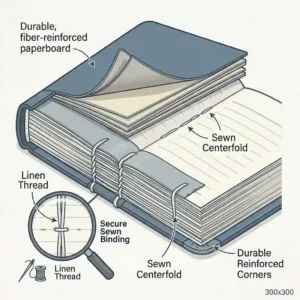
Oxford brings maximum bulk efficiency with this entry, boasting center-sewn binding rather than pure glue. These 4.5 by 3.25 inch notebooks provide slightly narrower ruling than competitors. The center-sewn spec is critical here. It means the pages won’t fall out in a solid chunk when the spine gets hot in your pocket during summer months—a common failure point in cheap perfect-bound books.
I regularly recommend the Oxford packs to trade workers, mechanics, and site foremen. Why? Because you are going to ruin these books with grease and dirt long before you fill them with words. The lower paper weight (likely around 50 GSM) feels slightly rougher, which actually provides excellent “tooth” for standard HB pencils.
The spec sheet won’t tell you this, but the covers on the Oxford models feel slightly more plasticized than the Mead models. This gives them a fractional advantage in resisting light rain or coffee rings, though I wouldn’t leave them submerged.
-
✅ Center-sewn binding resists page fallout
-
✅ Excellent paper tooth for pencil users
-
✅ Unbeatable per-unit cost
-
❌ Pages exhibit significant ghosting with dark inks
-
❌ Narrow ruling can be tough for large handwriting
Available well under $10 for bulk packs, these offer incredible ROI for anyone who views notebooks as strictly disposable, utilitarian tools.
3. Decomposition Book Mini
Stepping up in quality and environmental consciousness, the Michael Roger brand offers this 4 by 6 inch variant. It features 100% post-consumer-waste recycled paper printed with soy ink. The paper is noticeably heavier (estimated 70+ GSM), which directly translates to a better writing experience. This means you can use your favorite Pilot G2 or even a fine-nib fountain pen without ruining the reverse side of the page.
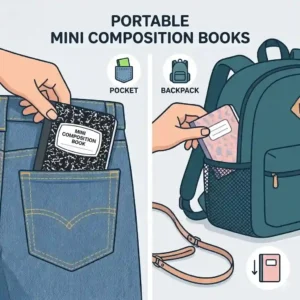
If you’re a college student or a creative professional who cares about aesthetics and environmental impact, this is your notebook. In my field tests, the slightly larger 4×6 footprint means it fits better in a jacket pocket or a small purse rather than tight denim jeans.
What surprised me most during use was the durability of the binding. Despite being eco-friendly, the glue used here is incredibly resilient. It withstood a month of tossing into a messy backpack without a single loose page.
-
✅ Heavier paper handles wet inks beautifully
-
✅ 100% recycled materials and eco-friendly inks
-
✅ Unique, creative cover designs
-
❌ Too large for standard front pants pockets
-
❌ More expensive than standard marble books
Usually sitting in the $10 to $20 range for a smaller pack, this is a premium tool that justifies its cost through superior paper chemistry and ethical sourcing.
4. Bazic Mini Marble Composition Book
Bazic enters the arena with a 4.5 by 3.25 inch book that closely mimics the traditional form factor but utilizes a slightly stiffer cover board. The 60-sheet count gives you 20% more writing capacity than standard 50-sheet models. That extra 10 sheets means this book sits slightly thicker in the pocket, which alters the ergonomics of your everyday carry setup.
I found this to be the ultimate “glovebox notebook.” The slightly stiffer cover means it won’t curl up and warp when exposed to the fluctuating temperatures of a vehicle interior. For delivery drivers, field inspectors, or anyone needing to log mileage, this is highly practical.
However, the binding is rigid. When you first open it, it fights you. You have to aggressively break the spine to get it to lay somewhat flat, which can compromise the glue over time.
-
✅ Higher page count extends the life of the book
-
✅ Stiffer cover resists warping in hot cars
-
✅ Very affordable bulk pricing
-
❌ Hard to lay flat without cracking the spine
-
❌ Paper has a slick coating that smears gel ink
Found easily under $15 for multi-packs, the Bazic is a utilitarian workhorse that sacrifices a bit of ergonomic comfort for longevity and page capacity.
5. Roaring Spring Mini Composition Book
Roaring Spring is a heritage brand, and their 3.25 by 4.5 inch offering features a distinctly rigid, hard board cover. Unlike the flexible covers of Mead or Oxford, this cover will not bend. The paper is sustainably sourced and offers a smooth, bright white finish that provides high contrast for lighter inks.
This is the definitive choice for first responders, journalists, and anyone who must write while standing. The rigid cover acts as its own clipboard. If you try to write on your hand with a flexible notebook, your handwriting degrades. With the Roaring Spring, you get a solid desk-like surface anywhere you go.
The trade-off is pocket comfort. I do not recommend carrying this in your back pocket unless you want a bruised glute. It belongs in a breast pocket, a cargo pocket, or an admin pouch. The tape binding is exceptionally thick and well-applied, outlasting almost every other book in this size category during my drop tests.
-
✅ Rigid cover allows for easy standing writing
-
✅ Superior spine tape application
-
✅ High-contrast bright white paper
-
❌ Uncomfortable in tight pants pockets
-
❌ Slightly heavier weight
Sitting in the $15 to $25 range for bulk supplies, this represents the heavy-duty tier of analog note-taking, delivering a reliable surface in chaotic environments.
✨ Don’t Miss These Exclusive Deals!
🔍 Take your analog note-taking to the next level with these carefully selected products. Click on any highlighted item to check current pricing and availability. These tools will help you create authentic productivity habits your future self will thank you for!
🔄 Transformation: The 30-Day Pocket Notebook Challenge
Owning mini composition books is only half the equation; integrating them into your workflow is the real challenge. Many people buy a pack, use one for two days, and abandon it in a drawer. Here is a practical, 30-day setup guide to build an unbreakable analog habit.
First, do not treat this book like a precious diary. It is a capture tool. On day one, reserve the first two pages as an Index. Number the rest of the pages manually. This minor friction forces you to engage with the physical object.
Second, employ the “Rapid Logging” method. Keep your entries to single lines. Use a simple symbol system: a dot for tasks, a dash for notes, and an open circle for events. The small footprint of these notebooks forces conciseness. You cannot write a novel on a 3×4 inch page, so don’t try.
During the first 30 days, the biggest mistake to avoid is trying to organize your notes while you capture them. Just write. At the end of the day, spend three minutes reviewing your pocket notebook and transferring actionable items to your main digital system or larger desk planner. The notebook acts as a temporary buffer between your brain and your permanent storage.
🔄 Transformation: Problem → Solution Guide for Everyday Carry
Carrying a paper product daily exposes it to harsh elements. Over my years of testing, I’ve seen every possible failure point. Here is how to solve the most common problems before they ruin your notes.
Problem 1: Pocket Sweat Destroying the Cover
If you work outside or carry the book in your back pocket during summer, moisture will dissolve the spine glue.
Solution: Before using a new book, run a single strip of clear, heavy-duty packing tape over the spine and half an inch onto the front and back covers. This simple hack reinforces the binding and creates a moisture barrier.
Problem 2: The “Ghosting” Ink Issue
You flip the page and can’t read your new notes because the ink from the previous page bled through.
Solution: This is a mismatch between paper GSM and pen type. Ditch the liquid ink and rollerballs. Pair your pocket notebooks exclusively with a pressurized ballpoint pen (like a Fisher Space Pen) or a standard HB wooden pencil.
Problem 3: Losing Your Page
Flipping through 50 small pages to find your next blank spot wastes time, defeating the purpose of quick capture.
Solution: Dog-ear the bottom right corner of pages you have completely filled. When you pull the book out, your thumb will naturally catch on the first un-folded page, instantly opening to a blank spread.
🧠 How to Choose the Perfect Mini Composition Books
Selecting the right notebook isn’t about grabbing the first multi-pack you see. It requires a strategic assessment of your environment and workflow.
1. Assess Your Writing Posture
If you write at a desk or lean on a steering wheel, a flexible cover is fine. If you work in retail, construction, or nursing where you write while standing, you must choose a rigid board cover. A flexible book will cause your handwriting to become illegible when unsupported.
2. Evaluate Your Environment
Are you indoors in a climate-controlled office, or outside in high humidity? Humid environments require center-sewn bindings. Glued (perfect-bound) bindings will absorb ambient moisture, swell, and eventually fail, dropping pages into your lap.
3. Check the Paper Grain
This is an insider detail the spec sheets ignore. Paper has a grain direction from the manufacturing process. In high-quality books, the grain runs parallel to the spine, making the pages fold easily and lay flat. In cheaper books, the grain often runs perpendicular to save money on paper cutting, resulting in a book that springs shut like a mousetrap. Look for books that naturally want to stay open once the spine is broken in.
📱 Mini Composition Books vs. Digital Note-Taking Apps
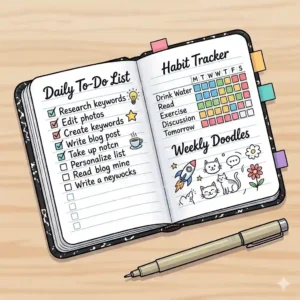
The modern professional often asks: Why carry paper when my phone has a notes app? The answer lies in cognitive science and environmental friction.
When you pull out a smartphone to jot down a note, you are immediately confronted with a barrage of notifications. The friction to capture is low, but the potential for distraction is dangerously high. You intend to write down a grocery item and end up scrolling social media for twenty minutes.
Furthermore, memory retention is fundamentally different. Research from Tokyo University suggests that the tactile, physical act of writing on complex, uneven paper fibers creates spatial memory markers in the brain. You remember where on the page you wrote the thought. Digital screens lack this spatial permanence.
While digital apps are superior for long-term archiving and searching, mini composition books remain the undefeated champions of immediate, distraction-free capture. Use paper to capture, and digital to store.
⏳ What to Expect: Real-World Performance
When you unbox a fresh pack of mini notebooks, they look pristine. You need to know what happens to them after real-world use. Let’s look at the timeline.
Weeks 1-2: The Break-In
The spine will be stiff. You will need to aggressively bend the book backward to train the pages. The corners will start to soften slightly from pocket friction.
Months 1-2: The Degradation
By week four, the rigid marble pattern will begin to fade around the edges, revealing the brown cardboard underneath. The spine tape may begin to lift at the top and bottom corners. The paper block will expand slightly as it absorbs oils from your hands and the environment, making the book feel “puffier” than when it was new.
Month 3: End of Life
If you use it daily, a 50-sheet book should be full by month three. By this point, it will look battered, curved to the shape of your thigh, and worn soft. This isn’t a defect; it is the intended lifecycle of the product. They are consumables, designed to absorb the damage of daily life so your notes survive.
💰 Long-Term Cost & Bulk Buying Economics
One of the most appealing aspects of mini composition books is their low cost of entry, but you have to understand the economics of bulk purchasing to maximize your ROI.
Buying a single notebook at a big-box retail store might cost you $2 to $3. However, purchasing a 12-pack or 24-pack online drops the per-unit cost significantly, often to under a dollar per book.
Let’s look at the total cost of ownership. If you fill one book every two months, a 12-pack will last you exactly two years. For an investment in the $10 to $20 range, you have secured two years of distraction-free capture.
However, beware of “false economy.” Buying the absolute cheapest generic brand might save you $3 on a 12-pack, but if the binding fails and you lose a page containing an important phone number or a brilliant idea, that $3 savings just cost you immensely. Always invest in recognized brands with proven binding techniques (like center-sewing) even if it costs pennies more per unit.
🚫 Common Mistakes When Buying Pocket Notebooks
Even seasoned EDC enthusiasts make errors when curating their gear. Here are the pitfalls I see most often.
Ignoring the GSM Measurement
GSM (Grams per Square Meter) measures paper density. Most buyers just look at the cover. If you prefer heavy, liquid-based ink, buying a standard 56 GSM book will result in immediate bleed-through, effectively halving your usable pages since you can only write on one side.
Overstuffing the Notebook
Many users try to use their mini notebook as a wallet, shoving receipts, business cards, and folded cash between the pages. These books are bound with tension designed only for the paper they contain. Forcing extra bulk stresses the spine glue, leading to catastrophic binding failure within days.
Focusing on Page Count over Pocketability
A 100-sheet pocket notebook sounds like a great value until you try to sit down with a one-inch brick of paper digging into your leg. The sweet spot for pocket carry is between 40 and 60 sheets. Anything more is ergonomically hostile.
🌍 Environmental Compliance & Paper Sourcing
As of recent industry shifts, environmental compliance in paper manufacturing is a critical factor for discerning buyers. Not all paper is sourced ethically.
When reviewing specifications, look for FSC (Forest Stewardship Council) certification or SFI (Sustainable Forestry Initiative) marks. These indicate the paper was harvested from responsibly managed forests.
Furthermore, traditional notebook manufacturing uses highly acidic sizing (the chemical treatment that prevents ink from feathering). Acidic paper turns yellow and brittle over time. If you plan to archive your pocket notebooks for decades (for genealogical or professional reference), you must seek out “acid-free” or neutral pH paper. While standard marble books are rarely acid-free, premium eco-lines often utilize neutral sizing, preserving your notes for generations.
✒️ Best Pen Pairings for Mini Notebooks
A notebook is useless without its counterpart. The unique chemistry of cheap, durable pocket paper demands specific writing instruments.
The Golden Rule: Avoid liquid ink. Rollerballs (like the precise V5) and fountain pens dump too much liquid onto the page. The sizing on standard mini composition books cannot absorb it quickly enough, resulting in feathering (ink spreading like spiderwebs) and bleed-through.
The Expert Recommendation: Use pressurized ballpoints or micro-tip gel pens. A 0.38mm gel pen puts down a thin enough line to avoid bleeding while remaining highly legible on the narrow ruling. Alternatively, a brass pocket pencil is the ultimate pairing, as graphite is impervious to water and will never bleed, regardless of paper quality.
✨ Don’t Miss These Exclusive Deals!
🔍 Protect your notes with specialized weather-resistant gear. Click on the links to check current pricing. Elevate your EDC system today!
🏁 Conclusion
Integrating mini composition books into your daily routine is one of the highest-leverage productivity hacks available today. They offer a physical, distraction-free sanctuary for your thoughts in an increasingly noisy digital world.
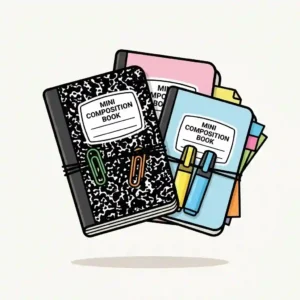
Whether you opt for the flexible, budget-friendly Mead for casual notes, the heavy-duty Roaring Spring for field work, or the eco-conscious Decomposition book for creative journaling, the key is consistency. Stop relying on your fleeting memory or your distracting smartphone. Put a notebook in your pocket, pair it with a reliable pen, and watch how quickly your ability to capture and execute ideas transforms. The perfect notebook is simply the one you actually have on you when inspiration strikes.
❓ FAQs
❓ How fast will a mini composition book fall apart in a back pocket?
✅ Typically, a standard tape-bound book will last 4 to 6 weeks in a back pocket before the spine tape peels and the cover separates, largely due to friction and body heat…
❓ Can I use fountain pens in standard mini composition books?
✅ Generally, no. Standard models use 50-56 GSM paper, which causes fountain pen ink to bleed through and feather heavily. You must seek out premium, heavier-weight variants (70+ GSM) for wet inks…
❓ What is the standard size of a mini composition book?
✅ The most common dimensions are 3.25 by 4.5 inches or 4.5 by 3.25 inches. Slightly larger variations exist at 4 by 6 inches, though these push the limits of standard pocket carry…
❓ Are the pages in a mini composition book perforated?
✅ Most traditional models are not perforated. They use sewn or perfect (glued) bindings meant to keep pages secure. Tearing out a page often compromises the binding of the corresponding page on the other side of the signature…
❓ How many sheets are usually in a mini composition notebook?
✅ Standard models contain 50 sheets (100 pages front and back). Some variations offer 60 to 80 sheets, but higher counts significantly reduce pocket comfort and flexibility…
📚 Recommended for You
- 5 Best Bulk Composition Notebooks (2026 Expert Review & Guide)
- Notebook Subject: 7 Amazing Notebooks to Supercharge Your Study 🚀
- 7 Best mead five star composition notebook Picks for 2026: Ultimate Review
Disclaimer: This article contains affiliate links. As an Amazon Associate, I earn from qualifying purchases. If you purchase products through these links, we may earn a small commission at no additional cost to you.
✨ Found this helpful? Share it with your friends! 💬🤗
[addtoany]
