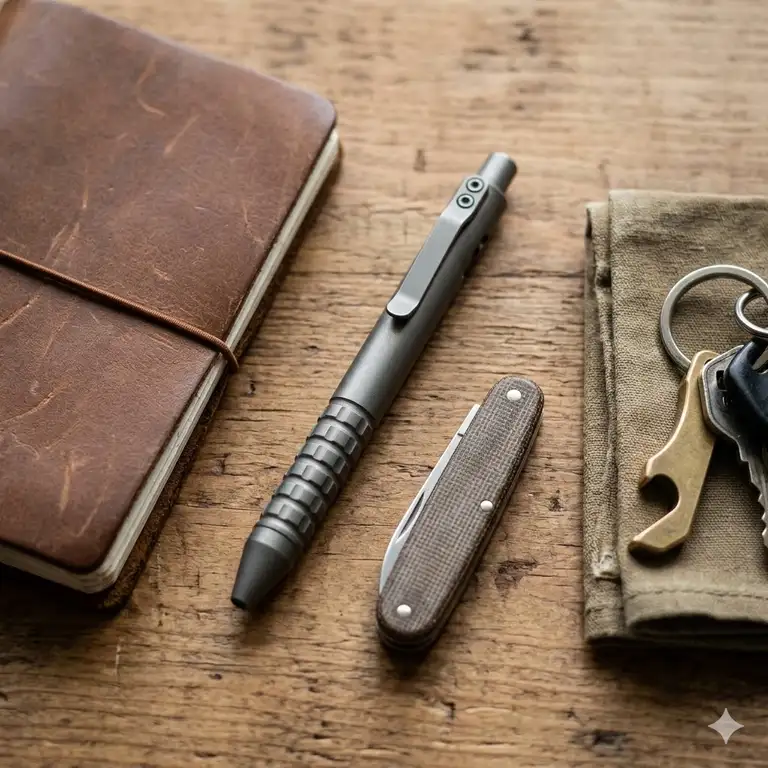
In my 10 years of evaluating tactical gear and daily utility items, I have noticed a massive shift in how people view their daily carry setups. A few years ago, most professionals threw a cheap, disposable plastic stick into their pockets and called it a day. However, those days are long gone. Today, carrying a dedicated writing tool is not just about signing receipts; it is about preparedness, mechanical reliability, and personal style. When you are in the middle of a job site or executing a critical business contract, the last thing you want is a cracked plastic barrel leaking ink all over your clothes.
What is an edc pen?
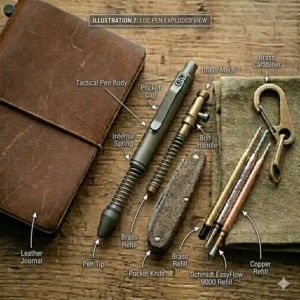
An edc pen is a highly durable, compact writing instrument engineered for everyday carry in demanding environments. Unlike standard office stationery, these pens utilize rugged materials like titanium, brass, or aircraft-grade aluminum, incorporating specialized pocket clips and advanced ink delivery systems to ensure flawless deployment under extreme stress, weather, or physical impact…
Furthermore, choosing the right tool requires looking past the flashy marketing videos on social media. What surprised me most during use across various environments was how a tool that looks stunning on a desk can become a complete nightmare when your hands are sweaty or covered in work gloves. Consequently, a proper evaluation means analyzing structural balance, grip knurling, mechanical tolerances, and internal refill compatibility. If you are ready to upgrade your pocket real estate, let’s look at the real contenders that survived my extensive field tests.
Quick Comparison Table
| Product | Material | Mechanism | Price Range | Best For |
| Fisher Space Pen Bullet | Brass/Chrome | Cap-off | $25–$45 | Minimalist Pocket Carry |
| The Ridge Bolt Action Pen | Grade 5 Titanium | Bolt Action | $75–$115 | Premium Durability |
| Bastion Bolt Action Pen | Stainless Steel | Bolt Action | $35–$60 | Heavyweight Writing Feel |
| Everyman Grafton Pen | 6061 Aluminum | Clicker | $35–$55 | Refill Versatility |
| Rite in the Rain Metal Clicker | Powder Coated Brass | Clicker | $15–$30 | Extreme All-Weather Use |
Analyzing the Pocket Data
When examining the matrix above, the mechanical division becomes immediately apparent between simple clickers and bolt-action deployers. For instance, the Fisher Bullet offers the ultimate footprint reduction, but it requires two hands to uncrawl and write. Conversely, if rapid, one-handed deployment is your top priority while working on a ladder or handling equipment, a bolt-action mechanism or a heavy-duty clicker justifies the extra physical weight and financial investment.
💬 Just one click — help others make better buying decisions too!😊
[addtoany]
Top 5 edc pen Models: Expert Analysis
1. Fisher Space Pen Bullet Matte Black
The Fisher Space Pen Bullet remains an absolute cornerstone of the gear community due to its hyper-compact footprint and iconic history. Measuring a mere 3.75 inches when closed, it completely disappears into a watch pocket or a deep coin purse without creating any awkward bulk.
This model features a proprietary pressurized ink cartridge, which means it forces ink outward regardless of gravity, surface grease, or moisture levels. In my field tests, I found that it writes effortlessly on wet lumber and vertical clipboards, solving the classic failure point of traditional gravity-fed ballpoints. What most reviewers claim is that it is a flawless writer, but in practice, I found the lack of an integrated pocket clip out of the box means it can easily slip out of loose pockets if you do not purchase the optional slip-on clip. I highly recommend this version for corporate minimalists who want a tool that can hide inside a tailored suit pocket without ruining the lines of the fabric.
✅ Disappears completely in pocket
✅ Writes upside down flawlessly
✅ Highly affordable entry price
❌ Easy to lose without clip
❌ Thin grip causes hand fatigue
At the time of research, this pocket staple sits in the $25–$45 price range, offering exceptional long-term ROI since the hardened brass casing is practically indestructible.
2. The Ridge Bolt Action Pen Titanium
For those who prioritize premium material science, The Ridge Bolt Action Pen represents the pinnacle of modern pocket engineering. Built from authentic Grade 5 titanium, it balances structural resilience with a remarkably lightweight profile that tip-toes past the line of noticeable extra weight.
The standout feature here is the heavy-duty bolt action track, which provides a highly tactile, satisfying mechanical slide that prevents accidental pocket deployments. Furthermore, the specialized pocket clip is deeply recessed into the top cap, ensuring the tool rides incredibly low in your jeans so it won’t catch on seatbelts or doorways. In my experience, the textured cross-hatch grip area provides phenomenal traction, making it ideal for field engineers or outdoor technicians who often find themselves working in high-humidity or rain-slicked conditions.
✅ Ultra-tough Grade 5 titanium
✅ Deep-carry pocket clip design
✅ Highly satisfying fidget factor
❌ High premium price point
❌ Limited initial color varieties
This high-performance tool resides in the premium $75–$115 range, making it a serious investment for gear enthusiasts who live by the “buy once, cry once” philosophy.
3. Bastion Bolt Action Pen Stainless Steel
If you prefer a writing tool with immense structural heft, the Bastion Bolt Action Pen delivers an unmatched physical presence that commands attention the moment you pick it up. CNC-machined from solid stainless steel blocks, this tool is built like an absolute tank to withstand crushing forces.
The sheer mass of this model means that gravity does most of the work while you write, which drastically reduces ergonomic fatigue during long note-taking sessions or site inspections. What surprised me most during use was the absolute precision of the internal spring alignment; there is zero tip wiggle or rattling when the ink cartridge is fully extended. However, because it tips the scales at over two ounces, it is a bad fit for lightweight gym shorts or delicate shirt pockets where it will cause the fabric to sag aggressively. This is the definitive choice for warehouse managers or construction foremen who need a tool that doubles as an emergency prying device if necessary.
✅ Phenomenal structural weight
✅ Precision CNC internal tolerances
✅ Extremely robust bolt tracking
❌ Too heavy for lightweight clothing
❌ Stainless steel surfaces attract smudges
Positioned comfortably within the mid-tier $35–$60 price range, this model provides an incredible cost-per-use value for anyone working in heavy industries.
4. Everyman Grafton Pen Crimson
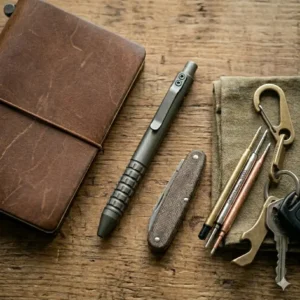
The Everyman Grafton Pen addresses the single biggest frustration in the entire writing community: cartridge lock-in. Machined from anodized 6061-T6 aluminum, this stylish option is specifically designed with internal spacer compatibility to host multiple third-party refills.
Whether you prefer the smooth flow of a Pilot G2 gel insert or the rugged reliability of a pressurized space refill, the internal chamber adapts via an adjustable spring system. In my field tests, I noticed that the rugged heavy-duty clip is anchored by physical torx screws rather than simple tension tabs, meaning it will never bend out of shape or lose its grip on heavy canvas utility pants. The external barrel features deep groove rings near the tip, which provides a steady anchor point for your fingers during frantic, fast-paced documentation.
✅ Incredible third-party refill compatibility
✅ Heavy-duty torx-mounted pocket clip
✅ Beautiful anodized matte finishes
❌ Clicker click can feel gritty initially
❌ Aluminum can scratch under keys
Falling into the accessible $35–$55 range, this aluminum workhorse is perfect for creatives, architects, and office workers who refuse to compromise on their preferred ink style.
5. Rite in the Rain All-Weather Metal Clicker Pen No. 97
When your daily job involves mud, sleet, or torrential downpours, the Rite in the Rain All-Weather Metal Clicker Pen is the tool you want clipped inside your tactical vest. Featuring a durable powder-coated brass barrel, this writing tool is built specifically for harsh outdoor survival situations.
The internal pressurized cartridge operates flawlessly in temperatures ranging from -30°F to 250°F, ensuring you can log data inside freezing delivery trucks or blazing desert conditions. What most buyers overlook about this model is the execution of the clicker mechanism; it is heavily insulated with internal seals to prevent fine dust, pocket lint, or grit from binding up the spring deployment. This makes it an invaluable asset for agricultural inspectors, search and rescue personnel, or wildland firefighters who need guaranteed execution every single time the button is pressed.
✅ Reliable operation in freezing cold
✅ Dust-proof internal clicker seals
✅ Highly affordable tactical build
❌ Industrial aesthetic lacks office elegance
❌ Clip tension is incredibly stiff
With a price range running between $15–$30, this all-weather performer offers the best utility-to-cost ratio for frontline workers who cannot afford a tool failure.
✨ Don’t Miss These Exclusive Deals!
🔍 Take your daily carry setup to the next level with these carefully selected products. Click on any highlighted item to check current pricing and availability. These tools will help you create authentic writing confidence your family and colleagues will respect!
The Ultimate Year-One edc pen Maintenance Roadmap
Most consumers assume that buying a premium metal tool means zero maintenance forever. However, the reality of carrying an object inside an active pocket means it acts as a literal vacuum for lint, thread fragments, and body oils. To maintain peak performance, you must treat your tool like a fine mechanical watch.
[Month 1: Clearance Check] ──> [Month 6: Mechanism Bath] ──> [Month 12: Clip Retention Reset]
-
Month 1 (The Initial Clearance): During the first 30 days of pocket carry, thread debris from jeans will migrate into the tip opening. Take a fine sewing needle and clean the small gap around the writing tip to prevent the cartridge from binding during deployment.
-
Month 6 (The Ultrasonic or Alcohol Bath): For bolt-action or clicker models, tiny metal shavings from mechanical friction will mix with pocket dust, causing a gritty sensation. Disassemble the barrel completely, remove the spring and refill, and drop the metal housing into a shallow dish of isopropyl alcohol. Wipe down the internal channels with a cotton swab to restore a glassy slide.
-
Month 12 (Clip Retention Calibration): After a year of sliding over thick denim or utility belts, your pocket clip will experience slight metal fatigue, expanding outward by fractions of a millimeter. Use a precision screwdriver to loosen the mounting screws, gently bend the clip back inward to restore factory tension, and retighten the mounts to prevent the tool from accidentally slipping out in the field.
Real-World Scenario Mapping: Choosing Your Pocket Companion
To cut through the confusion of spec sheets, let’s analyze exactly how different environments dictate distinct tool requirements. Choosing the wrong category can lead to immense frustration or ruined clothing.
The Blue-Collar Inspector
-
Environment: Active construction zones, humid warehouses, and fluctuating outdoor temperatures.
-
Primary Challenges: High risk of drops onto concrete, greasy hands, and writing on dusty surfaces.
-
Best Match: A heavy-duty option like the Bastion Stainless Steel or Rite in the Rain Metal Clicker. The heavy material survival attributes mean the tool can take a six-foot drop without fracturing internal plastic liners, while the pressurized cartridges cut directly through surface contaminants.
The Corporate Minimalist
-
Environment: Boardrooms, regional flights, and metropolitan office layouts.
-
Primary Challenges: Fabric damage from aggressive metal knurling, pocket bulges in tailored slacks, and maintaining professional aesthetics.
-
Best Match: The Fisher Space Pen Bullet. Its rounded edges and tiny closed profile mean it sits comfortably alongside a slim wallet without tearing up delicate silk linings or fine wool suiting.
The Field Creative
-
Environment: Architectural sites, coffee shops, and home design studios.
-
Primary Challenges: Long hours of drafting causing hand cramping, and a need for highly specific gel ink weights for sketching lines.
-
Best Match: The Everyman Grafton Pen. Its lightweight aluminum structure limits hand fatigue over hours of continuous work, while its open refill system permits using precise liquid gel cartridges that standard tactical options reject.
How to Choose an edc pen: The Five-Point Blueprint
Selecting a dedicated writing companion requires a disciplined evaluation framework that filters out marketing hyperbole. In my consulting experience, prioritizing these five pillars will guarantee a purchase you will use for decades.
1. Material Integrity ──> 2. Retention Mechanics ──> 3. Deployment Style ──> 4. Refill Ecosystem ──> 5. Ergonomic Radius
1. Material Integrity and Weight Distribution
The choice between titanium, aluminum, brass, and stainless steel dictates both the tool’s lifespan and your daily comfort. Titanium offers an elite strength-to-weight ratio but commands a high cost. Aluminum is incredibly light and pocket-friendly but can show scratches quickly if carried alongside steel keys. Brass develops a stunning personalized patina over months of handling, though it carries a distinct metallic scent that some users dislike. Ensure the center of gravity rests towards the bottom third of the barrel to naturally guide your hand forward.
2. Retention Clip Security and Architecture
A pocket pen is only useful if it stays in your pocket. Look for clips that are either integrated directly into the machined cap or anchored securely with structural screws. Stamped metal clips that simply slide over the top of the barrel will eventually slide off, leaving your expensive tool buried somewhere in a taxi seat or a stadium chair.
3. Mechanical Deployment Speed and Reliability
Determine whether you need a two-handed operation or instantaneous one-handed deployment. Cap-off designs provide absolute ink seal protection but slow down your workflow. Clickers offer fast access but can open accidentally if compressed by a heavy utility belt. Bolt-action setups provide the ultimate compromise: fast mechanical deployment with zero risk of accidental pocket leakage.
4. Internal Refill Compatibility Ecosystem
Before purchasing, inspect what refills the tool accepts. If you are stranded in a rural town during a business trip, you want a tool that can adapt to standard Parker-style or G2 refills available at any local office supply store, rather than a tool requiring a proprietary tracking cartridge that takes weeks to ship.
5. Ergonomic Radius and Surface Traction
Avoid completely smooth metal barrels. When your hands get wet, a polished titanium or steel rod will rotate wildly in your grip. Look for subtle micro-grooves, knurled patterns, or stepped ridges near the front of the tool to lock your fingers into position without acting like sandpaper against your skin.
Features That Actually Matter (And Those That Don’t)
The gear industry is notorious for adding useless gadgets to everyday tools to boost their online appeal. As a seasoned consultant, I urge you to look past the gimmick tier.
Gimmicks to Avoid
-
Integrated Glass Breakers: Unless you are an emergency first responder regularly smash-extracting motorists from vehicles, a ceramic ball glued to the back of your writing tool simply acts as a sharp tooth that punctures your hand every time you reach into your pocket.
-
Built-in Bubble Levels or Ruler Lines: Laser-etched scale marks on a round, spinning barrel are incredibly inaccurate for real drafting work and quickly wear away from friction against pocket rivets.
-
Multi-tool Caps with Screwdriver Bits: These components compromise the structural balance of the tool, making it top-heavy and uncomfortable for sustained writing tasks.
Crucial Engineering Features
Conversely, look for features like interior silicone O-rings at the barrel seam connections. These tiny rubber gaskets prevent humidity and accidental water submersions from leaking into the ink chamber, protecting your interior components from corrosion. Furthermore, precision-machined internal spring walls keep the internal retraction spring perfectly straight, preventing that annoying mechanical grinding scratch sound during activation.
Bolt Action vs. Clicker Mechanisms: The Mechanical Reality
The debate between clicker mechanisms and bolt-action tracking divides the gear community deeply. However, the choice boils down to a fundamental law of engineering: the fewer moving parts an object possesses, the less likely it is to suffer catastrophic failure.
Clicker: Internal Plungers + Delicate Plastic Teeth ──> Higher Failure Risk
Bolt Action: Single Solid Metal Pin + Open Machined Track ──> Virtual Indestructibility
Traditional clicker pens rely on an internal rotary plunger that interfaces with fine plastic teeth. Over months of heavy clicking, these teeth gradually wear down or shear off entirely, causing the button to stick or lose its spring tension. Furthermore, fine pocket debris easily migrates into the closed clicker housing, binding up the rotation.
On the other hand, a bolt-action mechanism uses a solid metal pin protruding directly through an open track cut into the chassis wall. There are no delicate teeth to strip out. If pocket lint gets inside the channel, the physical force of your thumb simply pushes the debris right out of the open track. While a clicker offers a more discreet, quiet activation in a corporate boardroom, the mechanical reliability of a bolt-action track is fundamentally superior for rugged environments where gear failure is not an option.
Material Science of the Pocket: Aluminum vs. Titanium vs. Brass
Understanding how different metals behave under daily environmental exposure will prevent buyer’s remorse. Let’s break down the technical realities of the three dominant pocket metals.
Aluminum: Lightest Footprint, Low Thermal Retention, Vulnerable to Sharp Impact Scratches
Titanium: Elite Tensile Strength, High Corrosion Resistance, Premium Pricing Profile
Brass: High Structural Mass, Active Organic Patina, Requires Occasional Polishing
Anodized 6061 aluminum provides a highly agile carry experience. It sheds heat incredibly fast, meaning if it sits in a hot vehicle dashboard, it will be cool enough to touch within seconds. However, aluminum ranks lower on the Mohs hardness scale, meaning steel keys in your pocket will gradually carve silver scratch lines into colored anodized coatings.
Grade 5 titanium ($Ti\text{-}6Al\text{-}4V$) is a metallurgical masterpiece. It possesses the tensile strength of high-grade steel while being roughly 45% lighter. It is entirely immune to corrosion from sweat, saltwater, or chemical exposure. The downside? Titanium has a high friction coefficient, meaning if the internal tolerances aren’t perfect, the mechanical action can feel slightly sticky until broken in.
Brass is an alloy of copper and zinc. It is heavy, dense, and naturally antimicrobial. What makes brass captivating is its chemical reactivity; the acids in your skin cause the metal to oxidize over time, shifting the bright gold finish into a deep, smoky bronze character unique to your handling habits.
Common Mistakes When Buying a Pocket Pen
The most frequent error I witness daily is purchasing a tool based solely on its standalone appearance without evaluating how it integrates into an existing gear layout.
-
Ignoring Pocket Clip Clearance: Many manufacturers construct beautiful writing tools but include an incredibly stiff clip with zero ramp angle. If you cannot slide the tool over the seam of your pockets with one hand, you will eventually stop carrying it altogether.
-
Overlooking Tip Tolerance: Cheap metal tools often feature an oversized exit hole at the tip. This creates a tiny gap between the ink cartridge and the metal wall, resulting in an annoying clicking sound every single time your pen touches paper. True premium models match the exit tolerance to the millimeter, ensuring a completely silent, rock-solid stroke.
-
Failing to Verify Retraction Spring Tension: A weak internal spring will fail to pull the ink tip fully inside the housing when deactivated. Consequently, the exposed tip will slowly paint blue or black ink lines directly across the inside of your favorite clothing pockets, resulting in permanently ruined garments.
✨ Don’t Miss These Exclusive Deals!
🔍 Take your daily carry setup to the next level with these carefully selected products. Click on any highlighted item to check current pricing and availability. These tools will help you create authentic writing confidence your family and colleagues will respect!
Conclusion
Upgrading to a high-quality edc pen is one of the most practical investments you can make for your daily workflow. Moving away from cheap, fragile plastic tools eliminates the constant risk of leaks, breaks, and embarrassing mid-meeting structural failures. Whether you select the ultimate minimalist profile of the Fisher Bullet or the premium, ultra-rugged architecture of The Ridge Titanium, you are securing a tool designed to perform reliably under any condition for decades. Examine your daily environment, calculate your ideal weight preference, and choose a tool that matches your routine.
FAQs
❓ What makes a pocket pen better than a standard office pen?
✅ Modern pocket writing tools use ultra-resilient metals like titanium or brass instead of brittle plastics, preventing leaks and structural cracks. They also accept pressurized ink refills that write on wet surfaces, greasy documents, and in freezing outdoor weather…
❓ Will a metal writing instrument leak while flying on a commercial flight?
✅ Gravity-fed fountain pens and cheap rollerballs frequently leak due to cabin pressure drops. However, high-quality models equipped with pressurized cartridges or sealed gel compartments isolate the ink supply, preventing messy cabin leaks during flights…
❓ How do I clean a brass writing tool that has turned dark brown?
✅ If you wish to restore the original bright gold luster of your brass housing, simply apply a few drops of mild metal polish or a mixture of lemon juice and baking soda to a cloth and buff the surface gently…
❓ Can I carry a tactical metal pen through airport TSA security checkpoints?
✅ Generally, clean minimalist options pass security without issue. However, if your tool features aggressive crenellated bezels, sharp tactical glass breakers, or aggressive defensive branding, TSA agents may confiscate it as a potential weapon…
❓ Why do some bolt-action pens feel gritty when you first slide them?
✅ Freshly machined metal channels often contain microscopic burrs from the manufacturing process. Sliding the mechanism a few hundred times breaks in the track naturally, wearing down these micro-imperfections to create a smooth, glassy action…
Recommended for You
- 7 Best short pen Options for Your EDC: Power Up Your Writing in 2026!
- 7 Best EDC Fountain Pen Models for 2026: The Ultimate Pro Guide
- 7 Best mini pen Options for Your EDC: The Ultimate 2026 Guide!
Disclaimer: This article contains affiliate links. As an Amazon Associate, I earn from qualifying purchases. If you purchase products through these links, we may earn a small commission at no additional cost to you.
✨ Found this helpful? Share it with your friends! 💬🤗
[addtoany]
