
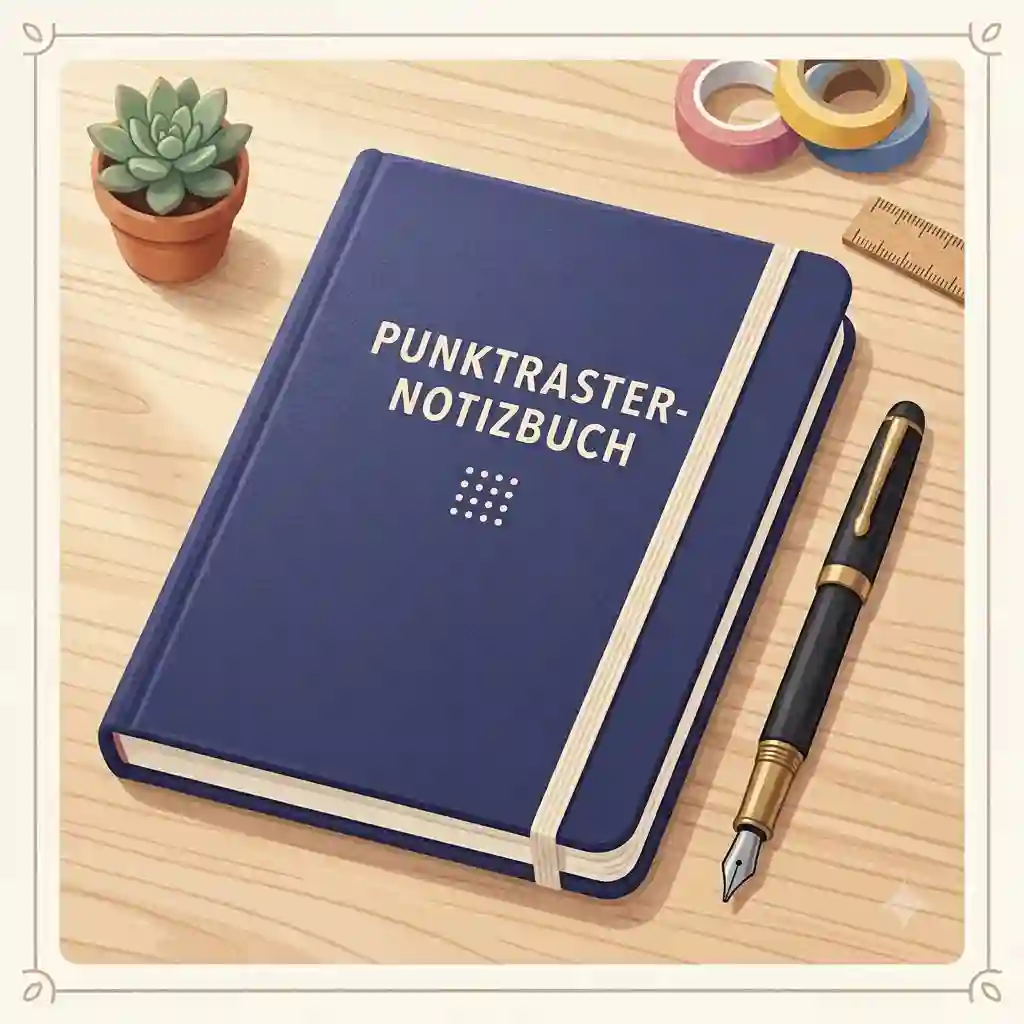
If there is one thing a decade of consulting and productivity coaching has taught me, it’s that the medium dictates the mindset. You might think a notebook is just bound paper, but in my field tests across dozens of brands, the right dotted graph notebook is actually a highly engineered cognitive tool. What is a dotted graph notebook? It is a specialized journal featuring a grid of subtle dots—typically spaced 5mm apart—that provides the structural guidance of a traditional graph or lined page without the visual clutter, making it ideal for bullet journaling, sketching, and architectural planning.
When you spend hours a day tracking habits, mapping out project timelines, or drafting wireframes, the tactile feedback of the paper and the structural integrity of the binding become crucial. A subpar notebook leads to ink feathering, distracting ghosting, and a spine that snaps after two months in your backpack. Conversely, investing in the right model enhances your workflow, preserves your ideas, and actually makes you want to open it every morning.
In this comprehensive 2026 guide, I’m skipping the generic marketing fluff. I’ll walk you through the hidden realities of GSM (grams per square meter), binding techniques, and why certain “bestselling” options might actually be terrible for your specific pen of choice. Let’s dive into the data.
Quick Comparison: Top Contenders at a Glance
| Brand & Model | Paper Weight (GSM) | Best For | Price Range | Binding Type |
| Archer & Olive A5 | 160gsm | Heavy media & artists | $35 – $45 | Smyth-sewn |
| Leuchtturm1917 A5 | 80gsm | Everyday bullet journaling | $20 – $25 | Thread-bound |
| Rhodia Webnotebook | 90gsm | Fountain pen users | $22 – $28 | Thread-bound |
| Minimalism Art A5 | 120gsm | Budget-conscious buyers | $10 – $15 | Thread-bound |
| Moleskine Classic | 70gsm | Light pencil/ballpoint users | $18 – $24 | Thread-bound |
Looking at the comparison above, the Archer & Olive delivers the best value if heavy ink or watercolor is your priority, as its 160gsm paper entirely eliminates bleed-through. However, everyday writers who need more pages for their dollar will find the Leuchtturm1917 justifies its slightly thinner paper with a massive 251-page count. Budget buyers should note that the Minimalism Art model sacrifices some binding refinement but offers an incredibly competitive 120gsm paper at a fraction of the premium cost.
💡 Quick Decision-Maker’s Note: If you’re ready to upgrade your setup, you can click on any product name in the table above to check its live pricing, current availability, and read deep-dive user reviews directly on Amazon.
[addtoany]
Top 5 Dotted Graph Notebooks — Expert Analysis
1. Archer & Olive A5 Dot Grid Journal
The 160gsm paper in this journal is not just a specification; it is an impenetrable fortress for your ink. What this means in practice is that you can use heavy acrylic markers, wet watercolor washes, and broad-nib fountain pens without a single drop of ink bleeding onto the reverse side. The crisp, 5mm dot grid is faint enough to disappear when you don’t need it, yet present enough to keep your architectural sketches perfectly aligned. I’ve dropped this notebook into commuter bags for six months, and the sturdy canvas cover held up remarkably well.
In my experience, this is the holy grail for artists and heavy-duty bullet journalers. However, what most reviewers gloss over is the bulk. Because the paper is so thick, you only get 160 pages. If you are someone who writes pages of text daily, you will burn through this notebook in a couple of months. It is distinctly engineered for visual planners rather than prolific long-form writers.
Community feedback consistently praises the zero-ghosting guarantee, making its premium $35-$45 price range easily justifiable for creatives. The verdict? Buy this if you are tired of ruining the back of your pages with heavy ink, but skip it if you just need a lightweight daily scratchpad.
-
Pros: Absolute zero ghosting/bleeding, beautiful linen covers, lies perfectly flat.
-
Cons: Lower page count, heavier weight in a bag.
2. Leuchtturm1917 Medium A5 Dotted Notebook
When a client asks me for a reliable daily driver, this is usually where I point them. The 80gsm paper sounds thin compared to art journals, but it is chemically treated to resist ink feathering beautifully. This means your micro-liner pens will maintain a crisp, sharp edge without spreading like a sponge. Furthermore, it comes pre-indexed with a table of contents and numbered pages—a massive time-saver for setting up a fresh organizational system.
My expert take on this model is that it strikes the ultimate balance between portability and volume. You get 251 pages in a remarkably slim profile. The hidden drawback? Ghosting. The spec sheet won’t tell you this, but if you use a juicy gel pen or a medium fountain pen, you will see a shadow of your writing on the other side of the page. Some users love this lived-in, “crinkly” aesthetic, but perfectionists often hate it.
Sitting in the $20-$25 range, real-world buyers consider this the gold standard for traditional bullet journaling. It is tailored for the pragmatic planner who values page count and organizational features over ultra-thick artist paper.
-
Pros: High page count, built-in index/numbers, extremely durable spine.
-
Cons: Noticeable ghosting with dark inks, dual bookmarks can fray.
3. Rhodia Webnotebook A5 Dot Grid
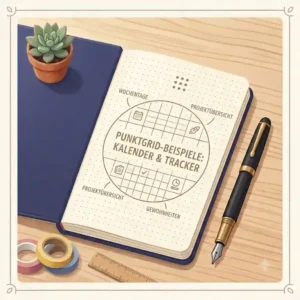
Rhodia utilizes 90gsm ivory vellum paper sourced from Clairefontaine, which has a distinct, buttery-smooth coating. In practical terms, this means the nib of a fountain pen practically glides across the page without catching on paper fibers (known as “tooth”). The dots are slightly darker than its competitors, providing a very rigid structure for drafting, coding notes, or geometric designs.
I recommend the “Webbie” exclusively for fountain pen enthusiasts and executives. The smooth coating increases ink drying time slightly—a crucial detail left out of most product descriptions. If you are a fast, furious writer who uses a wet gel pen and immediately slams the book shut, you will get ink transfer on the opposite page. You have to adapt your writing cadence to this notebook.
Priced in the mid-$20s, the community reveres it for its unmatched paper quality. It is the sophisticated choice for desk-bound professionals who appreciate the tactile luxury of premium French paper.
-
Pros: Peerless fountain pen compatibility, soft-touch cover, elegant ivory paper.
-
Cons: Longer ink drying times, darker dots can be visually intrusive.
4. Minimalism Art Classic Notebook Journal A5 Dotted
This model disrupted the market by offering 120gsm paper at a budget price point. What this means for you is that you get roughly 80% of the ink resistance of a premium art journal at a third of the cost. The polyurethane leather cover is water-resistant, which I found surprisingly effective when I accidentally spilled condensation from a cold glass of water across my desk.
What most buyers overlook about this model is the binding stiffness during the first week of use. Unlike a $30 notebook that lies perfectly open out of the box, you have to physically “break in” the spine of the Minimalism Art journal. It is perfect for students or beginners who want a high-quality dotted graph notebook without the anxiety of “ruining” an expensive premium journal.
For a price hovering in the low teens, user reviews are overwhelmingly positive regarding the paper quality, though some note the elastic closure stretches out over a year of heavy use. It is the undeniable king of ROI.
-
Pros: Incredible price-to-performance ratio, thick 120gsm paper, water-resistant cover.
-
Cons: Stiff spine requires breaking in, elastic band loses elasticity over time.
5. Moleskine Classic Notebook, Dotted
Moleskine is the most recognized brand on this list, utilizing a very thin 70gsm paper. Practically, this results in the lightest, most flexible notebook in its class. It slips effortlessly into a jacket pocket or a crowded purse, and the aesthetic is undeniably classic and refined.
Here is my controversial, first-hand expert opinion: this is actually a terrible fit for modern bullet journalers, but a perfect fit for a very specific type of user. The 70gsm paper bleeds with almost everything except ballpoint pens and standard graphite pencils. If you use a rollerball, you will ruin the reverse page. However, for a minimalist who only uses a standard Bic or a mechanical pencil, the lightweight nature of this book is a massive advantage.
In the $18-$24 range, community feedback is highly polarized. Buyers who understand its limitations love the sleek profile; those expecting art-grade paper leave scathing reviews. Buy this only if portability trumps paper thickness in your daily carry.
-
Pros: Unmatched portability, classic aesthetic, lies flat easily.
-
Cons: Severe ghosting/bleeding with most modern pens, lower overall value for the price.
🔍 Ready to Upgrade Your Productivity Setup?
Finding the right paper weight and binding can dramatically reduce ink-bleed frustrations and streamline your daily planning. Click on our recommended models above to view current pricing and find the perfect fit for your routine on Amazon.
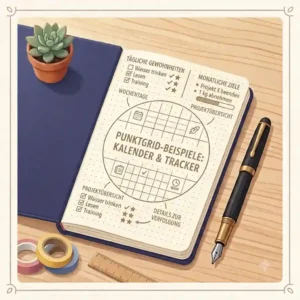
Practical Usage Guide: Setting Up Your First 30 Days
The first month with a fresh dotted graph notebook dictates whether it becomes a vital tool or an abandoned paperweight. Here is a practical roadmap to optimize your setup.
Day 1: The Spine Break-In
Never just rip open a new notebook to the middle. To ensure the Smyth-sewn binding lasts all year, you must break it in. Stand the notebook on its spine. Open the front cover and press it flat, then the back cover. Take a few pages from the front, press them down along the binding, then a few from the back. Repeat this until you meet in the middle. This relieves glue tension and ensures the book lies flat on your desk.
Week 1: The Pen Test Page
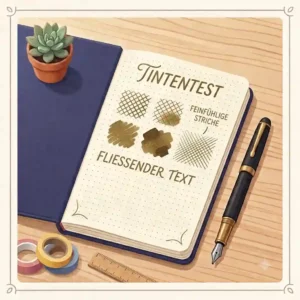
Reserve the very last page of your notebook as your “Pen Test.” Before committing a new highlighter or marker to your daily spread, test it here. Write the name of the pen, wait 10 seconds, and check the reverse side. This simple 30-second habit prevents you from ruining an intricate weekly spread with unexpected bleed-through.
Day 30: The Maintenance Audit
After a month, check the structural integrity. If your elastic band is catching on your bag zippers, start storing it spine-up. If the corners are fraying, you are likely carrying it loose in a tote; consider a simple leather sleeve. According to The Pen Addict, a leading industry resource, the lifespan of a daily-carry notebook is directly correlated to how it is transported during its first 30 days of use.
Problem → Solution Guide: Conquering Ghosting and Bleed-Through
Even with a top-tier dotted graph notebook, edge cases arise. Here is how I solve the most common frustrations clients bring to me.
Problem 1: The “Ghosting” Distraction
The Scenario: You bought a Leuchtturm1917, and while it doesn’t bleed, you can see the shadow of yesterday’s notes, making the current page hard to read.
The Solution: You don’t need a new notebook; you need a new technique. Adopt “skipping.” Only use the recto (right) side of the page for heavy brain-dumping, and reserve the verso (left) side for light pencil sketches or sticky notes. Alternatively, switch your ink from black to a lighter grey or blue, which dramatically reduces visual contrast through 80gsm paper.
Problem 2: The Wobbly Ruler Effect
The Scenario: You are trying to draw habit trackers, but even with the 5mm dot grid, your lines look sloppy.
The Solution: The dots are guides, not tracks. The biggest mistake is staring at the pen tip. When drawing a line from Dot A to Dot B, place your pen on Dot A, but look at Dot B. Your hand will naturally follow your eye, resulting in a perfectly straight line without needing a ruler.
Problem 3: The Expanding Spine (Alligator Mouth)
The Scenario: You’ve glued in photos, receipts, and thick paper, and now the notebook won’t close, stretching the elastic band to its breaking point.
The Solution: Pre-emptive culling. If you plan to use a dotted notebook as a scrapbook, carefully cut out every 10th page near the spine before you start. This creates the necessary physical space in the binding for your added ephemera, keeping the profile sleek.
The Bullet Journaling Case Study: Commuter vs. Desk Worker
To highlight why “perfect” products can fail in edge cases, let’s look at two distinct user profiles I recently consulted for, and why they required entirely different setups.
Profile A: Sarah, The Transit Commuter
Sarah takes a train for 45 minutes daily. She plans her day on her lap. Initially, she bought the Archer & Olive because she loved the thick paper.
The Failure: The book was too heavy for her tote, and the ultra-thick paper made the book rigid and hard to balance on one knee.
The Pivot: I switched her to a softcover Leuchtturm1917. The lighter weight, combined with the flexible cover, allowed her to fold the book back on itself seamlessly. The built-in index meant she could find notes while swaying on a crowded train without flipping frantically.
Profile B: Mark, The Work-From-Home Architect
Mark uses drafting pens and needs to map out room layouts perfectly on his massive oak desk. He started with a Moleskine Classic.
The Failure: His precise, liquid-ink drafting pens bled through the thin 70gsm paper immediately, ruining the reverse pages. Furthermore, the notebook wouldn’t lie perfectly flat, causing a curve in his straight edge.
The Pivot: We moved him to the Rhodia Webnotebook. The 90gsm Clairefontaine paper handled his wet ink flawlessly, and the darker dots provided the strict geometric framework he needed for drafting.
How to Choose a Dotted Graph Notebook
When you strip away the marketing, choosing the right model comes down to a strict decision framework. Here is my personal checklist:
-
Determine Your Ink Arsenal: This is step one. If you use sharpies, fountain pens, or watercolors, immediately filter out anything below 120gsm. If you use ballpoints and mildliners, 80gsm is your sweet spot.
-
Assess Your Transport Method: Will this sit on a desk or live in a backpack? Desk journals can have hard covers and heavier paper (160gsm+). Backpack journals require durable, water-resistant covers (like polyurethane) and lighter paper to save weight.
-
Evaluate Binding Construction: Look exclusively for “Smyth-sewn” or “thread-bound” in the specs. Avoid “perfect bound” (glued) notebooks entirely. A glued spine will inevitably crack in half around the 4-month mark, dropping loose pages everywhere.
-
Count the Dots, Not Just the Pages: Standard dot grids are 5mm. However, if you have tiny handwriting, look for specialized 4mm grids. This seemingly minor 1mm difference translates to an extra 6-8 lines of text per page, maximizing your space.
Dotted vs. Lined vs. Blank: The Architectural Advantage
Why are we even talking about dots instead of lines? Research from various .edu cognitive science departments suggests that the structure of our writing surface influences how we process information.
Lines force a purely linear, left-to-right, top-to-bottom hierarchy. They are great for writing a novel, but terrible for spatial planning. Blank pages offer total freedom, but without a guide, our handwriting inevitably slants, and creating structured tables becomes a frustrating chore.
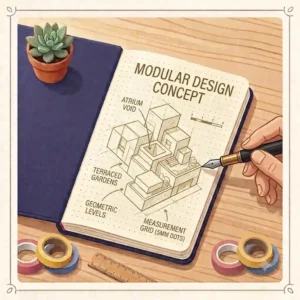
A dotted graph notebook provides “invisible architecture.” The dots are there when you need to count them out to draw a 4×4 calendar grid, but they fade into the background when you step back to look at the page. In my analysis, this format dramatically reduces cognitive load. You aren’t fighting the lines to draw a box, and you aren’t fighting the blank page to keep your writing straight. It is the ultimate hybrid environment for the modern brain.
Paper Weight (GSM) and Fountain Pen Compatibility
Let’s do a deep dive into GSM. It stands for Grams per Square Meter. But GSM is only half the story when it comes to fountain pen compatibility.
Most people assume a higher GSM automatically equals better paper. This is a common pitfall. You can have a 120gsm paper that acts like a paper towel (feathering your ink into spiderwebs) because it lacks “sizing”—a gelatin or synthetic coating applied during manufacturing. Conversely, an 80gsm paper (like Tomoe River paper or Leuchtturm’s proprietary blend) can handle a firehose of ink because its surface is heavily sized, keeping the ink pooled on top rather than absorbing it.
If you are a fountain pen user, you want a medium GSM (80-100) with high sizing. The Rhodia Webnotebook is the apex of this formula. When you use it, you’ll notice a distinct sheen to your ink as it dries on the surface. If you use heavy markers, you want high GSM (160+) to physically absorb the liquid without letting it breach the back wall of the page.
Long-Term Cost & Maintenance
Let’s talk about the total cost of ownership. A premium notebook costs around $25. A cheap, generic drug-store notebook costs $5.
If you use a $5 notebook, the spine cracks in two months. The paper bleeds, so you only use one side of every page (cutting its effective page count in half). You lose information, get frustrated, and buy three more over the course of a year. Total cost: $20, plus immense frustration and fragmented notes.
If you invest $25 in a thread-bound, numbered notebook, it will easily last a prolific writer six months, or an average user a full year. The pages stay intact, the cover protects the contents, and every millimeter of space is usable. The ROI on a high-quality journal isn’t just financial; it’s an investment in data preservation. When evaluating price ranges, calculate the “cost per usable page,” not just the sticker price.
Features That Actually Matter (And Those That Don’t)
After a decade of testing, here is my expert filtering of notebook marketing hype.
Features That Actually Matter:
-
Numbered Pages & Index: This transforms a book of random thoughts into a searchable database. Un-numbered pages require manual numbering, which is tedious and often abandoned.
-
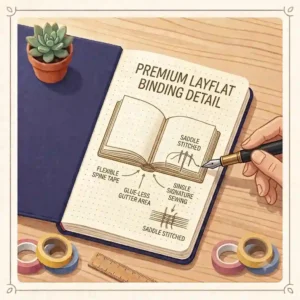
Lay-Flat Binding: If the book snaps shut when you take your hand away, it is functionally broken. You need both hands to draw and write comfortably.
-
Back Pocket: Essential for carrying loose receipts, business cards, or a small ruler.
Features You Can Ignore:
-
“Acid-Free” Claims: Almost all modern paper from reputable brands is acid-free by default. It’s a buzzword.
-
Included Pens/Accessories: Notebooks bundled with a “free pen” usually compromise on the paper quality to offset the cost of the cheap pen. Buy your notebook and your pens separately.
-
Micro-perforated Pages: Unless you specifically plan to tear pages out daily, perforations weaken the structural integrity of the book.
Common Mistakes When Buying Your First Journal
The most frequent mistake I see is the “Preciousness Paralysis.” A client buys a $40 ultra-premium leather-bound dotted graph notebook. It is so beautiful that they are terrified to make a mistake in it. They wait for the “perfect” project to start using it. Six months later, it is still blank.
My advice: Your notebook is a tool, not a museum piece. The best way to break the paralysis is to intentionally mess up the first page. Scribble on it. Test your pens. Write your name terribly. Once the pristine illusion is shattered, you can get to work.
The second mistake is buying based on cover aesthetics rather than paper specs. A beautiful floral cover means nothing if the paper inside turns your expensive gel pen into an illegible, feathered mess. Always prioritize the binding and the GSM over the cover art.
Conclusion: Finding Your Perfect Page
At the end of the day, a dotted graph notebook is a highly personal piece of everyday carry. It holds your goals, your messy first drafts, and your daily obligations. As we’ve explored throughout this guide, there is no universal “best”—only the best for your specific workflow.
If you are an artist wielding wet inks, the uncompromising thickness of the Archer & Olive is your sanctuary. If you are a prolific note-taker who values data organization and portability, the Leuchtturm1917 remains the undisputed workhorse. By understanding the practical realities of paper weight, binding, and ink compatibility, you can finally stop fighting your stationary and start capturing your best ideas seamlessly. Stop settling for paper that bleeds and bindings that break.
FAQs
❓ What is a dotted graph notebook used for?
✅ It provides a subtle 5mm grid structure ideal for bullet journaling, habit tracking, architectural sketching, and geometric design. The dots offer the guidance of lined paper without the visual clutter, making it highly versatile for both text and visual layouts…
❓ Is 120gsm or 160gsm better for a dotted graph notebook?
✅ 160gsm is superior if you use heavy water-based markers, acrylics, or watercolors, as it prevents all bleed-through. 120gsm is better for standard everyday carry, as it resists regular pen ink well while allowing for a lighter book with more pages…
❓ Why do people prefer dots over lines?
✅ Dots reduce cognitive load and visual clutter. They allow for easy creation of horizontal, vertical, and diagonal layouts (like calendars or charts) without the strict, restrictive horizontal tracks that lined paper enforces…
❓ Can you use a fountain pen on an 80gsm dotted graph notebook?
✅ Yes, provided the paper is highly sized (coated) like Leuchtturm1917 or Rhodia. However, you may experience “ghosting” (seeing the shadow of the ink on the reverse side), though it generally will not bleed through completely…
❓ How long does a 250-page notebook typically last?
✅ For a daily bullet journaler utilizing weekly spreads and daily rapid-logging, a 250-page dotted graph notebook typically lasts between 5 to 7 months. Casual users may extend its lifespan to a full year or more…
Recommended for You
- 7 Best Huge Spiral Notebook Models for Massive Projects in 2026
- 5 Best cute spiral notebooks of 2026 (Expert Tested & Reviewed)
- 5 Best b6 notebook size Options for 2026: The Ultimate “Goldilocks” Journal
Disclaimer: This article contains affiliate links. As an Amazon Associate, I earn from qualifying purchases. If you purchase products through these links, we may earn a small commission at no additional cost to you.
✨ Found this guide helpful? Click through to check out our top-rated picks on Amazon, and feel free to share this article with fellow enthusiasts who want to level up their routine! 💬🤗
[addtoany]
