
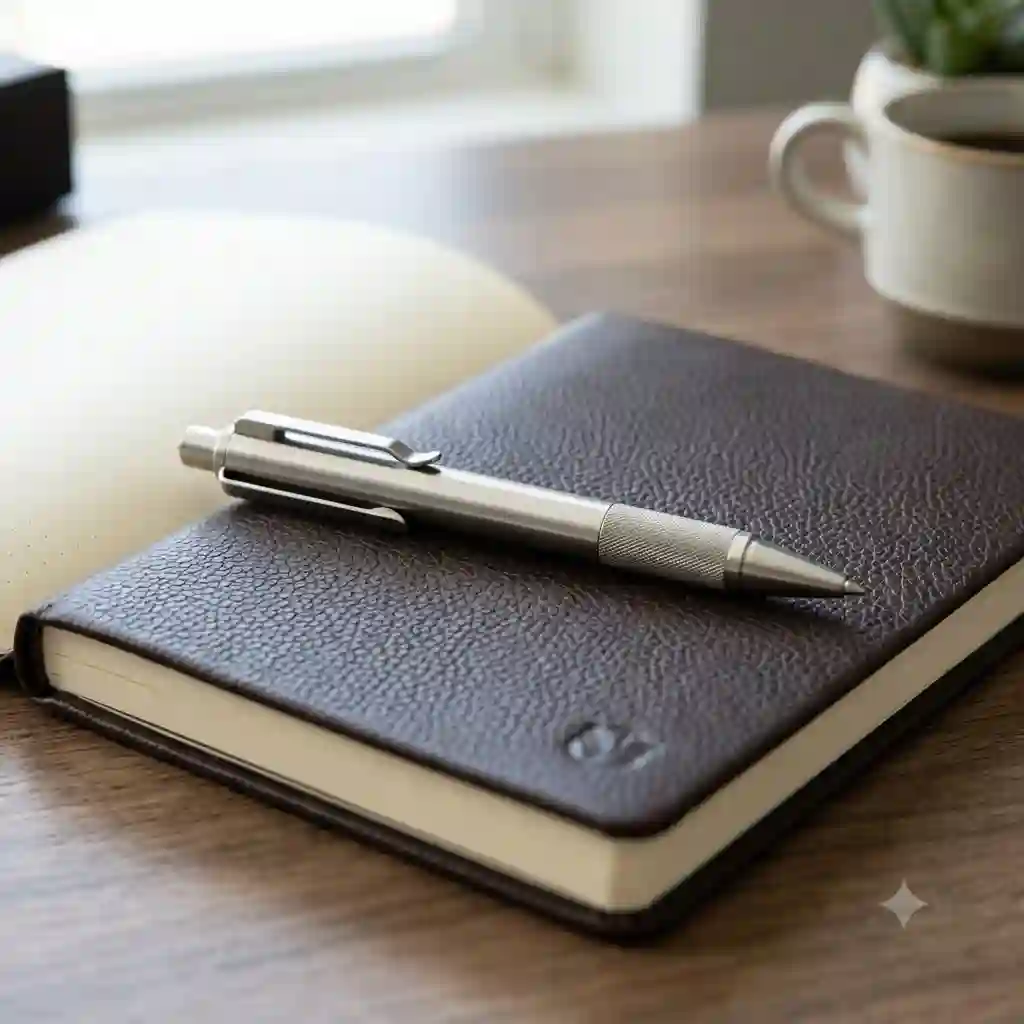
If you spend any amount of time in the everyday carry (EDC) community or simply appreciate fine stationery, you eventually reach a breaking point with disposable plastic writing instruments. After ten years of testing, collecting, and inevitably dismantling hundreds of writing tools as an industry consultant, I can confidently say that upgrading your gear changes how you work. You stop looking at writing as a chore and start viewing it as an experience. At the center of that experience is the classic stainless steel pen.
What is a stainless steel pen?
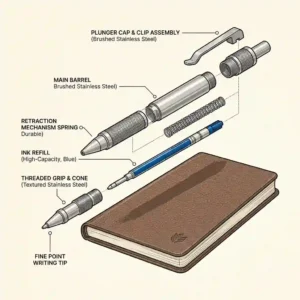
Essentially, it is a writing instrument where the primary barrel, grip section, and internal mechanisms are machined or stamped from steel alloys (often 304 or 316L). Unlike brass, which patinas heavily and leaves a metallic scent on your hands, or titanium, which is incredibly light but prone to galling and scratching, steel offers cold, hard durability. It is the gold standard for structural integrity in pocket-sized tools.
But not all steel is forged equal. In my field tests, I’ve found that a poorly balanced metal body can cause severe ergonomic fatigue within twenty minutes of note-taking. The magic lies in the intersection of center of gravity, thread tolerances, and ink viscosity. A heavy barrel paired with a cheap, skipping refill is essentially a beautifully machined paperweight.
In this comprehensive 2026 guide, we are going to bypass the marketing fluff. I will break down exactly how these instruments hold up after months of daily abuse, what the manufacturer specification sheets fail to mention, and which models actually deserve a spot in your pocket.
📊 Quick Comparison: Top Contenders at a Glance
Before we dive into the microscopic details of barrel knurling and deployment mechanisms, let’s look at the lay of the land. Here is how the top models stack up based on my long-term testing.
| Model | Best For | Deployment Mechanism | Refill Standard | Price Range |
| Parker Jotter Stainless | Budget EDC & History | Click (Plunge) | Parker Style G2 | Under $20 |
| Zebra F-701 | Field Work & Tactical | Silent Plunge | Proprietary Zebra | Under $15 |
| Bastion Bolt Action | Heavy-Duty Desk Use | Bolt Action | Parker Style G2 | $40 – $60 |
| Tactile Turn Short | Premium Machined EDC | Bolt Action | Schmidt EasyFlow 9000 | $90 – $120 |
| Lamy 2000 Ballpoint | Executive Office | Click / Knock | Lamy M16 | $150 – $200 |
Looking at the comparison above, the Parker Jotter undeniably delivers the best historical value for beginners, but if rugged field use is your priority, the Zebra F-701’s knurled grip and silent plunge mechanism completely justify its spot in your pocket. Budget buyers should note that while the Lamy 2000 is a spectacular executive piece, its proprietary refill system requires a long-term commitment that the more versatile Parker-style G2 options completely bypass.
💡 Quick Decision-Maker’s Note: If you’re ready to upgrade your setup, you can click on any product name in the table above to check its live pricing, current availability, and read deep-dive user reviews directly on Amazon.
🏆 Top 5 Stainless Steel Pens — Expert Analysis
Evaluating a stainless steel pen requires looking past the shiny exterior. You have to understand how the weight sits in the webbing of your hand, how the deployment mechanism feels after a thousand clicks, and whether the pocket clip survives being snagged on a seatbelt. Here are the five that survived my gauntlet.
1. Parker Jotter Stainless Steel Ballpoint
The Parker Jotter Stainless Steel Ballpoint is the undisputed godfather of modern retractable writing tools. The spec sheet boasts a full stainless steel barrel, a high-shine arrowhead clip, and compatibility with the legendary Quinkflow refill. But what does this actually mean for your daily routine? In practice, the slim 9.5mm diameter means it slips perfectly into the spine of a notebook or a tight shirt pocket without bulging. However, that same slim profile is a double-edged sword; if you have large hands or suffer from arthritis, this model will cause cramping during long writing sessions.
In my experience, the Jotter is best suited for quick, ephemeral tasks—signing receipts, jotting down a phone number, or checking off a grocery list. What most buyers overlook is the satisfying, high-tension mechanical “clack” of the deployment mechanism. It is louder and crisper than 90% of the market, which is incredibly satisfying for fidgeters but potentially annoying in a quiet boardroom.
Actual community feedback routinely praises the Jotter for its indestructible nature, with many users reporting passing these down through generations. For a price well under $20, it is the ultimate entry-level gateway into metal EDC gear. It simply works, though I highly recommend swapping the stock ink for a gel refill if you prefer a wetter, darker line.
Pros:
-
Incredibly slim and lightweight profile
-
Unmatched historical pedigree
-
Crisp, satisfying click mechanism
Cons:
-
Too narrow for extended writing sessions
-
Grip section lacks texture
2. Zebra F-701 All Metal Retractable
If the Jotter is a classic sports car, the Zebra F-701 is a tactical tank. Updated recently to remove all internal plastic components, the current iteration features an all-metal barrel, a heavily knurled grip section, and a near-silent plunge mechanism. The interpretation here is crucial: the aggressive knurling means that even if you are wearing gloves, working in the rain, or dealing with greasy hands in a machine shop, the barrel will not slip.
I’ve carried the F-701 on hiking trips and tossed it into toolboxes. What surprised me most during use was the absolute silence of the clicker. Unlike the Jotter, the F-701 deploys with a muted, high-resistance push. This makes it a favorite among first responders, military personnel, and students who don’t want to distract a quiet lecture hall. However, the proprietary 0.8mm fine point refill is notoriously dry. It writes reliably on dirty paper, but it lacks the smooth, gliding joy of modern rollerballs.
Hovering in the $10-$15 range, the community consensus is that this is the best “beater” EDC item on the market. It punches wildly above its weight class. If you lose it on a job site, it isn’t a financial tragedy, but it feels substantial enough to belong in a premium loadout.
Pros:
-
Aggressive knurling for superior wet grip
-
Silent, stealthy deployment mechanism
-
Extremely budget-friendly
Cons:
-
Proprietary ink is dry and uninspiring
-
Pocket clip is slightly rigid
3. Bastion Bolt Action Pen (Stainless Edition)
Stepping into the machined category, the Bastion Bolt Action Pen offers a completely different philosophy. Weighing in at a massive 2.8 ounces (nearly 80 grams), this is a heavy-duty instrument machined from a solid rod of steel. The spec sheet touts a proprietary bolt-action mechanism and a seamless body. Translated to real-world use, this means deploying the ink requires a deliberate, sweeping thumb motion that firmly locks the cartridge in place.
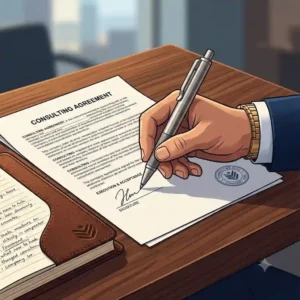
From my hands-on testing, this is not a pocket-friendly companion. The sheer weight will drag down the fabric of a dress shirt. Instead, this is the ultimate desk piece or heavy denim pocket tool. What the marketing fails to convey is the “center of mass” issue; because the barrel is uniformly thick steel, it carries a lot of back-weight. If you try to write a ten-page essay with this, your wrist will be screaming. But for signing contracts or making quick, authoritative notes, the heft feels incredibly premium.
At around $40 to $60, reviewers consistently highlight its indestructible nature—it practically doubles as a kubotan in a pinch. The fact that it takes standard Parker-style G2 refills means you have endless customization options for the ink, totally redeeming the heavy barrel with a smooth writing experience.
Pros:
-
Deeply satisfying bolt-action fidget factor
-
Virtually indestructible solid steel construction
-
Accepts widely available Parker-style refills
Cons:
-
Too heavy for prolonged writing
-
Back-heavy balance can cause fatigue
4. Tactile Turn Bolt Action (Stainless Steel – Short)
When you cross the $100 threshold, expectations shift from mere functionality to microscopic perfection. The Tactile Turn Bolt Action Pen delivers on this. Manufactured in Texas, the standout specification is the continuous micro-groove texture applied to the entire length of the 316L steel barrel. In practice, this means the pen feels like a very fine vinyl record. It provides exceptional grip without the aggressive, skin-shredding feel of traditional diamond knurling.
In my field tests, the “Short” version (which takes the Schmidt EasyFlow 9000 refill) provides the absolute perfect balance for a stainless steel pen. Because steel is dense, shrinking the length slightly prevents the back-heavy fatigue I experienced with the Bastion. The bolt mechanism features a fluid, crescent-shaped channel that is undeniably the smoothest on the market. The internal tolerances are so tight that when you unscrew the tip to change the ink, the seam practically vanishes when closed.
User reviews in the enthusiast community view Tactile Turn as a benchmark standard. While the $90-$120 price range is steep, you are paying for aerospace-level machining. This is for the buyer who appreciates the engineering tolerances of a mechanical watch and wants that same precision in their hand.
Pros:
-
Micro-textured grip is both comfortable and secure
-
Flawless, buttery-smooth bolt mechanism
-
Invisible machining seams
Cons:
-
Premium price point
-
Steel version is significantly heavier than their titanium models
5. Lamy 2000 Stainless Steel Ballpoint
Most people know the Lamy 2000 for its iconic Makrolon (fiberglass) fountain pen variant, but the Lamy 2000 Stainless Steel Ballpoint is a heavyweight executive masterpiece. The spec sheet highlights a seamless brushed finish and a spring-loaded pocket clip. What this actually means is that the clip will open smoothly over a thick leather portfolio without bending or snapping—a major failure point for cheaper, stamped-steel clips.
I have kept the Lamy 2000 on my office desk for years. What most buyers overlook is the unique torpedo shape. The belly of the barrel swells exactly where your thumb and index finger rest, creating a surprisingly ergonomic grip despite the slick metallic finish. However, the proprietary Lamy M16 refill is a point of contention. It is reliable and archival, but it lacks the vibrant saturation of Japanese gels.
Priced firmly in the luxury bracket (typically $150-$200), community feedback often points out that this is a statement piece. It is heavy (over 40 grams), impeccably balanced, and carries a mid-century modern aesthetic that turns heads in a boardroom. It is best suited for professionals looking to make a subtle, sophisticated impression.
Pros:
-
Spring-loaded clip is mechanically superior
-
Torpedo shape provides excellent ergonomic balance
-
Stunning mid-century brushed aesthetic
Cons:
-
Proprietary M16 refill limits ink choices
-
Expensive upfront investment
🔍 Ready to Upgrade Your Everyday Carry Setup?
Finding the perfect balance between durability and ergonomic comfort can completely eliminate writing fatigue from your workday. Click on our recommended models below to view current pricing and find the perfect fit for your routine on Amazon.
🛠️ The Year One Roadmap: Maintenance & Longevity
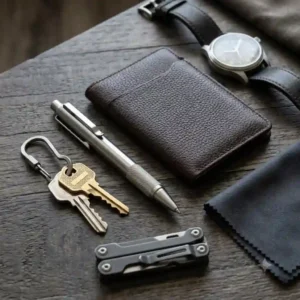
Amazon listings will sell you a metal body, but they never tell you what happens to that metal after 365 days of being shoved into pockets, dropped on concrete, and exposed to coffee spills. Here is the realistic maintenance cycle for your new gear.
The First 30 Days: The Break-in Period
When you first unbox a bolt-action or click-mechanism tool, the internal springs and metal-on-metal contact points will feel slightly stiff. Over the first month, the deployment mechanism will naturally lap itself. The friction between the internal steel components will smooth out. My advice? Do not lubricate it immediately. Let the metal surfaces naturally mate through normal use.
Month 6: Thread Galling and Cleaning
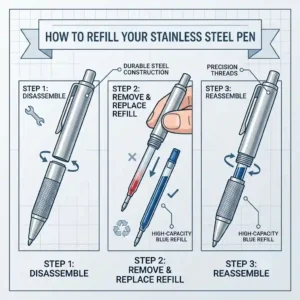
Around the six-month mark, you will likely need to change the ink. Because stainless steel is an incredibly hard alloy, the fine threads where the tip unscrews from the barrel can accumulate microscopic metal dust—a process related to thread galling. If it feels “crunchy” when you unscrew it, stop. Take a dry microfiber cloth, wipe the threads completely clean, and apply a microscopic amount of graphite powder or synthetic grease to the threads. This ensures it opens smoothly for the next decade.
Month 12: The Patina of Use
Unlike brass, steel does not oxidize into a green or brown patina. However, “brushed” finishes will eventually accumulate what the EDC community calls “snail trails”—tiny, polished micro-scratches from rubbing against keys or coins. This is normal. You cannot prevent it without keeping the item in a velvet pouch. Embrace the wear; it transforms a mass-produced item into a personalized tool.
🎭 Real-World Scenarios: Who Should Avoid Which Models
The biggest mistake you can make is buying a highly rated product that inherently clashes with your daily routine. Here are a few practical case studies to illustrate why “perfect” gear can fail in specific edge cases.
Case Study 1: The Long-Haul Student
Let’s say you are a law student staring down a three-hour written exam. You might be tempted by the heavy, durable Bastion Bolt Action because it feels premium. Do not do this. The high center of mass and the 80-gram weight will cause debilitating wrist fatigue by page four. In this scenario, the heavy steel is a liability. You need the lightweight Parker Jotter, or better yet, a non-steel alternative designed purely for ergonomics. Heavy metal is for quick notes; lightweight polymers are for essays.
Case Study 2: The Machine Shop Technician
If you work in an environment with grease, oil, or heavy moisture, the elegant Lamy 2000 is a terrible fit. The beautiful brushed steel finish becomes dangerously slippery when coated in engine oil. The smooth torpedo shape offers zero traction. Instead, you need the Zebra F-701. The aggressive, deeply cut knurling acts as a mechanical lock against your skin, ensuring you can still write even when your hands are compromised.
Case Study 3: The Boardroom Executive
Conversely, if you are wearing a custom-tailored suit, dropping the Zebra F-701 into your breast pocket will ruin the fabric. The aggressive knurling acts like a tiny file against delicate silk or fine wool. Here, the smooth, sleek profile of the Tactile Turn or the Lamy 2000 is essential.
🧠 How to Choose a Stainless Steel Pen: Features That Actually Matter
When evaluating whether a specific model fits your life, ignore the marketing buzzwords and focus on these three critical technical vectors.
1. Refill Compatibility (The Engine)
The steel body is just the chassis; the ink refill is the engine. I always advise clients to buy a barrel that supports the “Parker-style G2” format (not to be confused with the Pilot G2 plastic pen). The Parker-style G2 is a universal standard utilized by Schmidt, Fisher Space Pen, Ohto, and Parker themselves. This allows you to hot-swap a pressurized Fisher cartridge for underwater writing on Tuesday, and drop in a buttery smooth Schmidt EasyFlow 9000 for office signatures on Wednesday. Beware of proprietary sizes; they lock you into a single manufacturer’s ecosystem.
2. Deployment Mechanism Reliability
Clickers (knock mechanisms) are convenient, but they rely on tiny internal plastic or stamped metal cams that wear out over millions of cycles. Bolt-action mechanisms, pioneered heavily in the custom maker community over the last decade, rely on a simple steel pin sliding in a J-shaped channel. Mechanically speaking, there is almost nothing that can break in a bolt-action setup. If you want something that will outlive you, opt for the bolt.
3. Pocket Clip Tension and Material
A great body is useless if you lose it on day two. Stamped steel clips (like on cheap promos) bend easily and lose their tension. Look for machined clips (cut from a solid block of metal) or heavily sprung, spring-loaded clips (like the Lamy). In my field tests, the most common reason people replace their gear is not because it broke, but because a weak clip allowed it to slide out of their pocket on a train.
⚖️ Ergonomic Fatigue & Weight Distribution
The spec sheet won’t tell you this, but weight distribution is far more important than total weight.
You can have a 50-gram writing tool that feels nimble, and a 30-gram tool that feels sluggish. The secret is the center of gravity. Ideally, the balance point should rest directly in the webbing of your thumb and index finger when deployed. If the balance point shifts toward the back (the knock or the clip), the tip constantly wants to lift off the paper. Your fingers have to micro-correct this imbalance, leading to rapid forearm fatigue.
When testing, I physically balance the barrel on my index finger. Models like the Lamy 2000 have a taper that pushes the brass and steel internals slightly forward, anchoring the point to the paper. This hydro-static ink flow and forward balance make the heavy metal feel significantly lighter during actual use. When shopping, try to identify where the visual bulk of the material sits—if the cap looks twice as thick as the grip, avoid it for long writing sessions.
🚫 Common Mistakes When Buying Metal Pens
After a decade of consulting, I see the same three mistakes repeated by enthusiastic newcomers to the EDC world.
Mistake #1: Buying for Aesthetics Over Grip
A high-polish, mirror-finish steel barrel looks incredible in Instagram photos. In a slightly humid room, however, it becomes a bar of soap. Always prioritize some form of grip texture—be it knurling, micro-grooves, or a flared finger stop—over a purely smooth aesthetic.
Mistake #2: Ignoring the “Rattle”
Cheaper models suffer from tip rattle. This happens when the internal diameter of the tip is slightly larger than the refill. When you write, the ink cartridge bounces against the steel walls, creating an annoying audible click with every stroke. Premium manufacturers like Tactile Turn machine their tips to a tolerance of 0.001 inches to eliminate this. If you buy a budget model, a pro-tip is to wrap a tiny piece of clear tape around the tip of the refill to dampen the vibration.
Mistake #3: Assuming All Steel is Indestructible
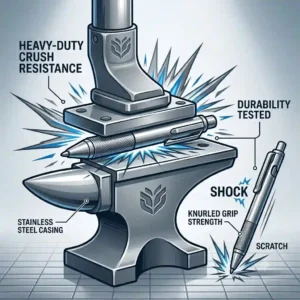
While 304 and 316L alloys are incredibly tough, the threads connecting the two halves are delicate. Dropping a heavy metal barrel directly on its exposed tip will bend the steel inward, jamming the mechanism permanently. It is durable against crushing forces, but vulnerable to precision impact.
🏁 Conclusion
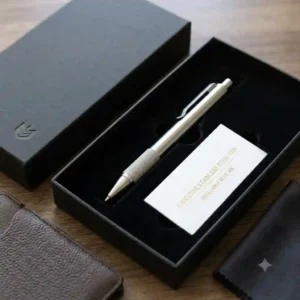
Upgrading to a premium stainless steel pen is one of the highest-ROI investments you can make in your daily workflow. It shifts a mundane, disposable action into a tactile, deliberate process. Whether you opt for the aggressive ruggedness of the Zebra F-701 for your workshop, the mechanical perfection of the Tactile Turn for your pocket, or the sleek executive presence of the Lamy 2000 for your desk, you are investing in a tool designed to outlast you.
Remember, the goal isn’t just to buy a heavy object; it is to find the precise balance of weight, grip, and refill compatibility that compliments your specific lifestyle. Pay attention to the center of gravity, respect the break-in period, and don’t be afraid to experiment with different ink cartridges until you find your perfect match.
❓ FAQs
❓ Does a stainless steel pen rust over time?
✅ Under normal conditions, no. High-quality 304 or 316L alloys contain chromium, which forms a passive oxide layer that prevents rust. However, prolonged exposure to harsh saltwater or industrial chemicals can cause pitting or mild surface corrosion over time…
❓ Can I take a heavy metal pen through airport security?
✅ Yes, standard writing instruments are completely TSA-compliant. However, “tactical” models with aggressive glass-breaker tips or kubotan styling may be confiscated at the discretion of the agent. Stick to traditional profiles for hassle-free travel…
❓ What is the difference between Parker style G2 and Pilot G2?
✅ This is a massive point of confusion. Parker-style G2 is a short, fat international standard used in most metal EDC bodies. The Pilot G2 is a long, thin plastic gel refill. They are absolutely not interchangeable without extensive internal modifications or spacers…
❓ Why is my bolt action mechanism feeling gritty?
✅ Grittiness is usually caused by pocket lint or microscopic metal dust trapped in the bolt channel. To fix this, disassemble the barrel, thoroughly wipe the bolt carrier and channel with isopropyl alcohol, and reassemble without heavy lubrication…
❓ Is titanium better than stainless steel for everyday carry?
✅ It depends on your priority. Titanium is about 45% lighter and completely corrosion-resistant, making it better for pocket carry. However, steel is harder, significantly cheaper, and less prone to scratching or thread galling than titanium…
📚 Recommended for You
- Best Ballpoint Pen for Sketching: 7 Elite Picks for Stunning Art
- 5 Best edc pen Models of 2026: Stop Carrying Cheap Plastic!
- Best 5 Titanium Pen Options for 2026: Expert EDC Review
Disclaimer: This article contains affiliate links. As an Amazon Associate, I earn from qualifying purchases. If you purchase products through these links, we may earn a small commission at no additional cost to you.
✨ Found this helpful? Share it with your friends! 💬🤗
[addtoany]
