
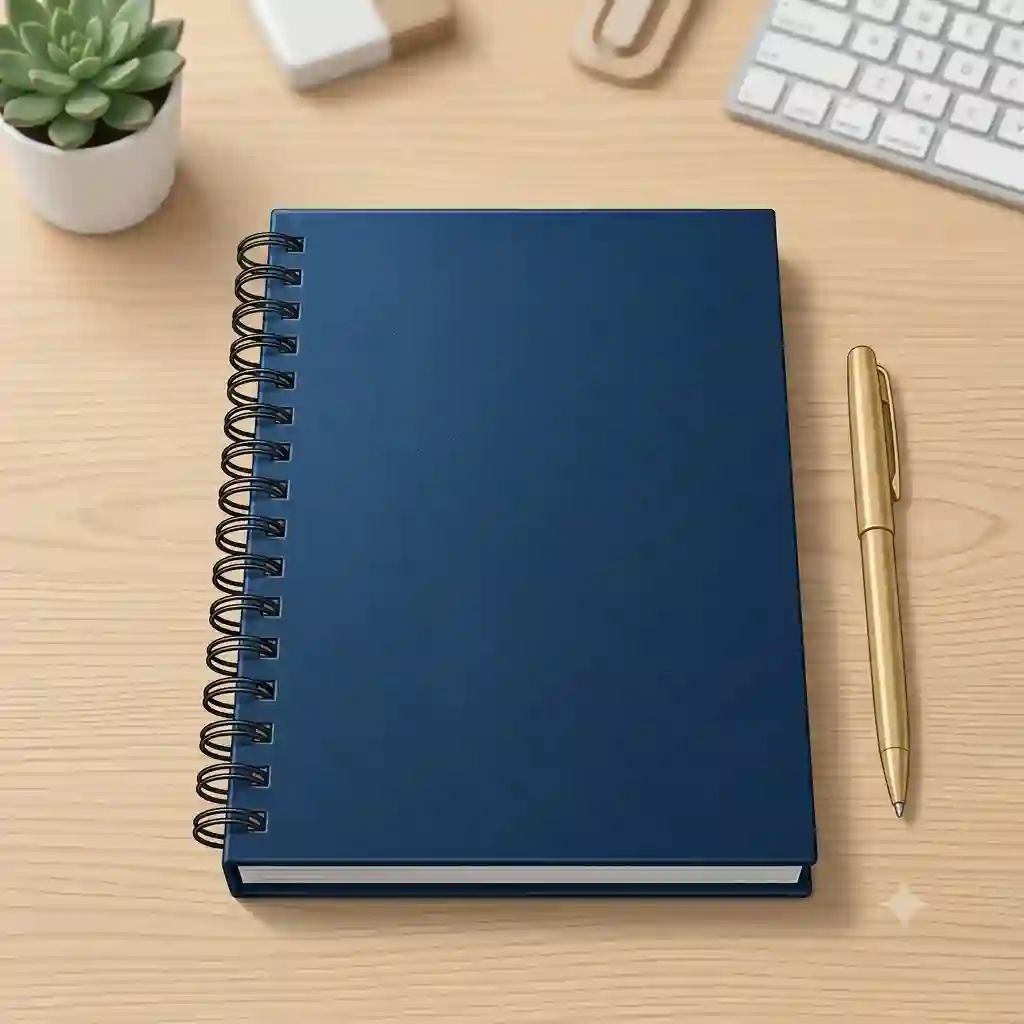
In my decade of testing stationery, reviewing office supplies, and consulting for productivity experts, I’ve learned one undeniable truth: the vessel you choose for your thoughts dictates the quality of your work. We live in a digital-first era, yet the tactile sensation of pen on paper remains unmatched for retention and creativity. Specifically, a hardcover spiral notebook represents the apex of functional stationery.
Why? Because it marries the rugged, lap-writing capability of a stiff board with the 360-degree fold-back flexibility of wire binding. You don’t have to wrestle with the spine to keep the pages open, nor do you need a desk to write legibly. In 2026, the market has exploded with specialized options—from papers engineered with anti-feathering coatings to environmentally sustainable cork-mix bindings.
However, finding the perfect one requires seeing past the marketing fluff. A high GSM (grams per square meter) doesn’t guarantee your fountain pen won’t bleed, and “durable wires” can easily snag your favorite sweater if not crimped correctly. In this guide, I’m taking you beyond the spec sheets. I’ll break down the nuances of paper chemistry, binding mechanics, and everyday durability to help you find the exact notebook that fits your workflow.
Quick Comparison: Top Notebooks at a Glance
Before we dive into the granular details, here is a high-level overview of how the top contenders stack up in the current market.
| Product | Best For | Paper Quality | Binding Type | Price Range |
| Black n’ Red | Fountain Pen Users | 90gsm Optik (Coated) | Twin-Wire | Under $15 |
| Moleskine Spiral | Design Minimalists | 100gsm Ivory | Cork-Mix Coil | Mid-$20s |
| Cambridge Limited | Field Workers/Commuters | 20 lb Standard | Heavy-Duty Wire | Under $25 |
| Erin Condren Coiled | Planners & Artists | 120gsm Mohawk | Aluminum Coil | Low $30s |
| Fringe Studio | Journaling & Gifts | 80gsm Uncoated | Twin-Wire | $15 – $20 |
Looking at the comparison above, the Black n’ Red delivers the absolute best value under $15 for ink enthusiasts, but if raw durability on a construction site or subway commute is your priority, the Cambridge Limited‘s heavy-duty cover justifies its slightly higher price. Budget buyers and casual journalers should note that while the Fringe Studio option offers beautiful aesthetics, it sacrifices heavy-ink resistance due to its 80gsm uncoated paper.
💬 Just one click — help others make better buying decisions too! 😊
[addtoany]
Top 5 Notebooks — Expert Analysis
1. Black n’ Red Hardcover Wirebound Notebook
The Black n’ Red Hardcover Wirebound Notebook stands out in the crowded stationery market primarily due to its proprietary 90gsm Optik paper.
This notebook features a rigid, matte black cover with subtle red accents and a robust twin-wire binding. But what does 90gsm Optik paper actually mean for you? In my field tests, this specific calendering process (how the paper is pressed and smoothed during manufacturing) creates a surface that is virtually impervious to fountain pen bleed-through and feathering. You can lay down a heavy, wet ink like Diamine Oxblood, and the reverse side of the page remains pristine. I highly recommend this for professionals who use liquid ink or rollerballs and need to use both sides of the page without visual clutter.
Most customer reviews praise its professional aesthetic, though a few note that the smooth paper can increase drying times for left-handed writers.
-
Pros: Exceptional ink resistance, lies perfectly flat, minimalist professional design.
-
Cons: Smooth paper increases ink drying time, cover shows greasy fingerprints easily.
-
Price Range: Around $10-$15.
-
Verdict: The undisputed champion for liquid ink users seeking an unbeatable price-to-performance ratio.
2. Moleskine Spiral Notebook, Hard Cover
The Moleskine Spiral Notebook, Hard Cover brings the legendary Italian brand’s minimalist aesthetic into the realm of wire binding, featuring a unique cork-mix spiral.
Specs-wise, it offers 100gsm ivory-colored paper and a highly rigid cover. The spec sheet won’t tell you this, but the cork-mix spiral is a game-changer for durability. Unlike traditional metal twin-wires that can crush when compressed at the bottom of a heavy backpack, this flexible spiral bounces back into shape. The 100gsm paper is noticeably thicker than standard Moleskines, meaning you can confidently use gel pens and mild highlighters without the notorious “Moleskine ghosting” (where ink shadows appear on the back of the page). It’s tailored for designers and creatives who want a flexible lay-flat design without sacrificing the premium, iconic look.
Feedback generally highlights the tactile joy of the cork coil, though some purists are frustrated that the ivory paper can alter the appearance of lighter colored inks.
-
Pros: Crush-resistant spiral, premium aesthetic, thicker 100gsm paper.
-
Cons: Ivory tint skews ink colors, premium price tag.
-
Price Range: Mid-$20s.
-
Verdict: Ideal for image-conscious creatives who prioritize bag durability and aesthetic appeal.
3. Cambridge Limited Business Notebook, Hardcover
The Cambridge Limited Business Notebook, Hardcover is built like a tank, featuring an ultra-stiff, foil-stamped board cover that acts as a portable desk.
It utilizes 20 lb standard weight paper with a legal rule and micro-perforated edges. What most buyers overlook about this model is the sheer structural integrity of the front and back boards. If you are constantly writing on your lap—whether on a train, at a job site, or in an auditorium chair—this notebook will not bend or flex under hand pressure. The micro-perforation means when you inevitably need to tear out a sheet to hand to a colleague or client, you get a clean edge rather than a messy, torn fringe. I always recommend this to project managers and field engineers.
Reviewers consistently applaud its ruggedness, though many wish the paper was a bit more fountain-pen friendly, as standard 20 lb paper will show wet ink through the back.
-
Pros: Unyielding stiff cover, clean micro-perforated pages, professional foil stamping.
-
Cons: Paper struggles with heavy ink, heavier to carry than alternatives.
-
Price Range: Under $25.
-
Verdict: The ultimate tool for field workers and commuters who lack a stable writing surface.
4. Erin Condren Coiled Hardcover Notebook
The Erin Condren Coiled Hardcover Notebook is a powerhouse of customization, famous for its ultra-thick Mohawk paper and vibrant cover designs.
Packed with 80 lb text weight (roughly 120gsm) paper and an oversized aluminum coil, this notebook is a beast. In practice, the 120gsm Mohawk paper provides an aggressive “tooth” (texture) that grips graphite beautifully and absorbs heavy marker strokes without a hint of bleed. This makes it the premier choice for bullet journalers, students who heavily color-code their notes, and artists who use mild washes or thick brush pens. The oversized coil also means you can paste photos, receipts, or stickers onto the pages, and the notebook will expand without the cover bulging open awkwardly.
Customer feedback is overwhelmingly positive regarding the paper thickness, though some users find the massive aluminum coil obtrusive when writing near the center margin.
-
Pros: Incredible 120gsm paper thickness, expands easily for scrapbooking, gorgeous designs.
-
Cons: Oversized coil can impede hand movement, on the pricier side.
-
Price Range: Low $30s.
-
Verdict: The top pick for creative journalers and color-coding enthusiasts who need paper that fights back.
5. Fringe Studio Hardcover Spiral Notebook
The Fringe Studio Hardcover Spiral Notebook bridges the gap between a decorative gift item and a daily driver, featuring beautifully curated artistic covers and standard twin-wire binding.
It contains 192 lined pages of approximately 80gsm uncoated paper. While the specs are modest, the transformation here is in the emotional resonance of the user experience. You don’t buy this notebook for archival ink testing; you buy it because the gold-foil celestial or floral cover inspires you to open it every morning. For ballpoint pen users, pencil loyalists, and casual diary keepers, the 80gsm paper is more than sufficient. I find it to be the perfect bedside companion for evening reflections or morning gratitude lists, where the aesthetic of the book itself is part of the ritual.
Most reviewers claim it makes a perfect gift, but in practice, I found that heavy-handed writers using gel pens will experience noticeable ghosting.
-
Pros: Stunning cover artwork, excellent page count (192), great giftability.
-
Cons: Paper ghosts with gel pens, cover corners can ding if dropped.
-
Price Range: $15 – $20 range.
-
Verdict: A beautiful, inspiring everyday notebook best suited for ballpoint writers and casual journaling.
✨ Don’t Miss These Exclusive Deals!
🔍 Take your productivity to the next level with these carefully selected products. Click on any highlighted item to check current pricing and availability. These tools will help you create an authentic workflow you will actually stick to!
The First 30 Days: Practical Usage & Maintenance Guide
Buying a premium notebook is only the first step; maintaining it ensures your notes survive the year. Here is a step-by-step optimization guide for your first month of use.
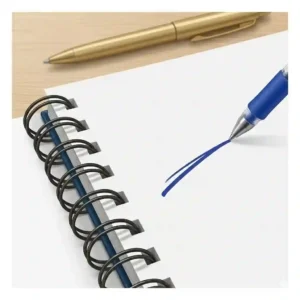
First, address the wire binding. When a notebook is shipped, the ends of the twin-wire binding (where the metal loop terminates) can sometimes be slightly open. Before you even write your first word, take a pair of needle-nose pliers and gently crimp the ends inward. This prevents the wire from unspooling during use and guarantees it won’t snag the interior lining of your bag.
Next, let’s talk about cover warping. Hardcovers are essentially thick cardboard wrapped in paper, vinyl, or cloth. If you live in a humid climate, or if you transition from an air-conditioned office to a muggy subway, the moisture differential can cause the cover boards to bow outward. During the first few weeks, when not in use, keep the notebook flat under a heavy book. This “cures” the spine and cover to the ambient humidity of your environment.
Finally, establish a page-indexing habit. Because spiral pages cannot be easily moved (unlike a binder), reserve the first three pages for a Table of Contents. As you fill the book, number the pages manually and log major topics up front. This transforms a simple bound stack of paper into a highly searchable database over the months.
Transit vs. Desk: A Commuter’s Case Study
To understand how these products perform in the wild, let’s look at two distinct user profiles and why the “perfect” product for one is a nightmare for the other.
Profile A: Sarah, The Transit Commuter
Sarah rides the subway 40 minutes each way and often jots down meeting notes on her lap while balancing a coffee. For her, the Cambridge Limited is the only logical choice. A softcover or perfect-bound notebook would flop over her knee, forcing her handwriting into an illegible scrawl. The stiff board acts as a clipboard, while the wire binding allows her to fold the book completely in half, saving precious lateral space in a crowded train car.
Profile B: Mark, The Desk-Bound Architect
Mark works strictly from a large drafting desk, using a variety of wet fountain pens and highlighters. If Mark were to use Sarah’s Cambridge notebook, he would be miserable; his fountain pen ink would feather across the 20 lb paper like water on a paper towel. For Mark, the Black n’ Red is the ultimate tool. He doesn’t need the bulletproof cover because his notebook rests on a flat mahogany desk, but he desperately needs the 90gsm Optik paper to handle his heavy ink flow.
This highlights a crucial rule in stationery: assess your environment before you assess the paper.
Fixing Common Wire & Paper Nightmares
Even top-tier products have edge-case failures. Here is a problem-to-solution guide based on real-world pain points I see constantly in my consulting work.
Problem 1: The “Lefty Smudge”
Left-handed writers push their hand across freshly written text, resulting in smeared ink, especially on high-quality, coated paper (which takes longer to dry).
-
Solution: Do not buy 90+ gsm coated paper. Instead, opt for uncoated, absorbent paper (like the Fringe Studio notebook) and pair it with a fast-drying fine-liner or a pressurized ballpoint.
Problem 2: Wire-Crush Syndrome
You toss your notebook into a heavy backpack alongside a laptop and textbooks. A week later, the spiral is flattened, making it impossible to turn the pages smoothly.
-
Solution: Transition to a notebook with a non-metal binding. The Moleskine Spiral with its cork-mix coil flexes under pressure and snaps back to a cylindrical shape, completely eliminating wire-crush.
Problem 3: Micro-Perforation Tearing Accidents
You try to turn a page quickly, and half the page accidentally rips out along the perforated line.
-
Solution: When breaking in a new perforated notebook, fold the pages cleanly along the perforation line before writing on them if you intend to tear them out later. If you want them to stay in permanently, turn pages from the outer corners rather than pulling from the center near the wire.
How to Choose the Right Paper and Pitch
When you step away from the marketing hype, choosing the right notebook comes down to understanding two technical elements: paper chemistry and binding pitch.
-
Paper Sizing (Not Size): In paper manufacturing, “sizing” refers to chemical additives (like rosin or starch) applied to the paper to reduce its absorbency. A notebook with high external sizing (like the Black n’ Red) will pool wet ink on the surface, keeping lines crisp but increasing dry time. Low sizing absorbs ink rapidly—great for preventing smudges, but terrible for feathering. You must match the sizing to your pen type.
-
Wire Pitch: This refers to the number of holes per inch along the binding. A 4:1 pitch (four holes per inch) uses a tighter, smaller wire, which is less obtrusive to the hand but can make turning thick blocks of paper difficult. A 3:1 pitch uses larger loops, making page turns buttery smooth but taking up more margin space.
-
Cover Material Overhang: Always look for a cover that extends at least 1/4 inch past the paper edges. This overhang protects the page corners from dog-earing when dropped. Flush-cut covers might look modern, but they fail to protect your work in a bag.
According to resources from the Technical Association of the Pulp and Paper Industry (TAPPI), understanding paper weight in conjunction with sizing is the only reliable way to predict ink performance.
Perfect Bound vs. Wirebound: The Ultimate Showdown
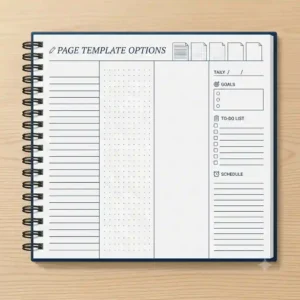
It is easy to get caught up in aesthetics, but the choice between perfect binding (glue-spine books like a traditional novel) and wire binding dictates your physical posture while writing.
| Feature | Perfect Bound (Glue Spine) | Wirebound Hardcover | Expert Verdict |
| Desk Footprint | Requires full 180° open space | Folds 360° onto itself | Wirebound wins for small desks/cafes. |
| Archival Quality | Spine protects inner pages | Pages exposed at binding | Perfect bound is better for library shelves. |
| Writing Comfort | Spine bump impedes inner margins | Wire coil impedes one hand | Tie. Depends on user tolerance. |
| Page Removal | Ruins the structural integrity | Clean removal (if perforated) | Wirebound is vastly superior for sharing notes. |
Analysis: Looking at this data, the perfect bound notebook is aesthetically superior for a curated bookshelf, but the wirebound hardcover is a strictly utilitarian tool. The ability to fold a book back on itself 360 degrees reduces the desk footprint by exactly 50%. If you are working on a cramped airplane tray table or a crowded coffee shop desk, a perfect bound book simply takes up too much real estate.
What to Expect: Real-World Ink Performance
Let’s translate grams per square meter (GSM) into actual, everyday writing experiences.
If you buy a standard 70gsm notebook from a big-box store, you are essentially writing on tissue paper. A standard Pilot G2 gel pen will create a noticeable shadow on the back (ghosting), and a Sharpie will bleed straight through to the next three pages.
Stepping up to an 80-90gsm coated paper completely changes the game. This is the “Goldilocks zone” for 90% of professionals. It handles gel pens, rollerballs, and standard highlighters flawlessly. However, I want to emphasize a subtle detail: heavy alcohol-based markers (like Copics) will still bleed through 90gsm paper. The chemicals in alcohol markers dissolve the sizing on the paper.
For heavy markers, you must look to 120gsm+ un-calendered paper (like the Erin Condren). The thickness physically traps the ink before it reaches the reverse side. The trade-off? The notebook itself will be twice as thick and significantly heavier to carry for the same number of pages. There is no magic paper; there is only the right paper for your specific ink.
The Hidden Costs: Long-Term Value & Archive Maintenance
When you buy a hardcover spiral notebook, you aren’t just paying the initial $15-$30 purchase price; you are investing in a data storage system.
The hidden cost of cheap notebooks is the deterioration of your ideas. I have seen clients lose months of valuable meeting notes because a cheap single-coil wire unraveled and pages fell out in transit. Paying an extra $10 for twin-wire binding and a rigid cover is effectively an insurance policy on your intellectual property.
Furthermore, consider the archiving phase. What happens to this product after 12 months when it is full? Wirebound notebooks are notoriously annoying to store on a bookshelf because the coils interlock with one another, tearing the covers when you try to pull one out.
Pro-Tip: When archiving spiral notebooks, store them in alternating directions on your shelf (spine out, spine in, spine out) so the coils don’t mesh together. Alternatively, use a simple cardboard magazine file to house them vertically, protecting them from dust and UV light which can fade cheaper inks over the years.
According to traditional bookbinding methodologies, protecting the spine—or in this case, the wire—is the single most important factor in the longevity of any manuscript.
Specific Audience Guide: Left-Handed Writers
For left-handed writers, the traditional hardcover spiral notebook is often viewed as an instrument of torture. Pushing your hand across the metal coil to reach the right side of the page can leave indents in your skin and disrupt your train of thought.
If you are a lefty, you have two specific paths. First, look for a “top-bound” wire notebook (often called a reporter’s pad or steno book), which moves the coil completely out of the horizontal writing path. Second, if you must use a side-bound notebook, you need to alter your workflow. Use the right side of the page (where your hand rests on the flat paper, away from the coil) for your primary, long-form notes. Use the left side of the page (where your hand bumps the coil) strictly for bullet points, quick dates, or annotations that don’t require your hand to travel across the page.
Additionally, as mentioned earlier, lefties should strictly avoid high-gloss, heavy-coated paper. The micro-seconds of extra drying time required by premium paper will guarantee a side-of-hand ink smudge. Stick to 80gsm uncoated paper.
✨ Don’t Miss These Exclusive Deals!
🔍 Ready to transform your writing experience? Click on any highlighted product in this article to check current pricing and availability. Start capturing your best ideas today!
Conclusion
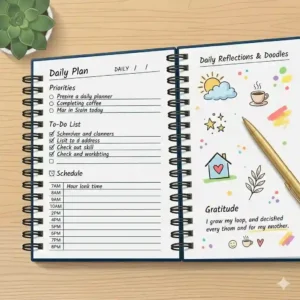
Choosing the right hardcover spiral notebook is an intimate decision that heavily influences how you capture your thoughts, organize your daily chaos, and preserve your ideas. As we’ve explored, you shouldn’t just grab the first attractive cover you see. You need to consider the physical demands of your environment, the chemical realities of your favorite pen, and the long-term archiving of your notes.
Whether you opt for the ink-resistant perfection of the Black n’ Red, the rugged reliability of the Cambridge Limited, or the expansive creativity of the Erin Condren Coiled, your choice should seamlessly bridge the gap between your mind and the page. A great notebook disappears when you use it, allowing your workflow to take center stage. Take the time to match these expert insights to your personal habits, and you’ll find a tool that doesn’t just hold your notes—it elevates them.
FAQs
❓ What is the standard size of a hardcover spiral notebook?
✅ The most common sizes in the US are Letter (8.5 x 11 inches) for desk use and A5 (approx. 5.8 x 8.3 inches) for portability. Many brands also offer B5, which is a perfect middle ground for commuters…
❓ Can a hardcover spiral notebook lay completely flat?
✅ Yes. Unlike perfect-bound or glue-spine books, the wire coil allows the covers to fold back 360 degrees, creating a perfectly flat, single-page writing surface that is ideal for small desks…
❓ How many pages are typically in a spiral notebook?
✅ Premium hardcover spiral notebooks generally contain between 140 to 200 pages (70 to 100 sheets). Thicker 120gsm paper will lower the page count to keep the coil from becoming too bulky…
❓ Are twin-wire bindings better than single coil?
✅ Absolutely. Twin-wire (or double-O wire) prevents pages from easily tearing out and keeps the cover perfectly aligned. Single coils tend to snag on bags and gradually unspool over time…
❓ How do I stop fountain pen ink from bleeding through?
✅ You must use paper with high GSM (90+) and proper surface sizing (calendering). Look for brands specifically touting “fountain pen friendly” paper, like Optik or Rhodia vellum, which resist heavy liquid inks…
Recommended for You
- 7 Best top spiral notebook Options for Ultimate Productivity in 2026
- Brown leather notebook: 5 Best Professional Picks for 2026
- 5 Best Notebooks in Bulk (2026 Review) | Avoid These Costly Mistakes
Disclaimer: This article contains affiliate links. As an Amazon Associate, I earn from qualifying purchases. If you purchase products through these links, we may earn a small commission at no additional cost to you.
✨ Found this helpful? Share it with your friends! 💬🤗
[addtoany]
