
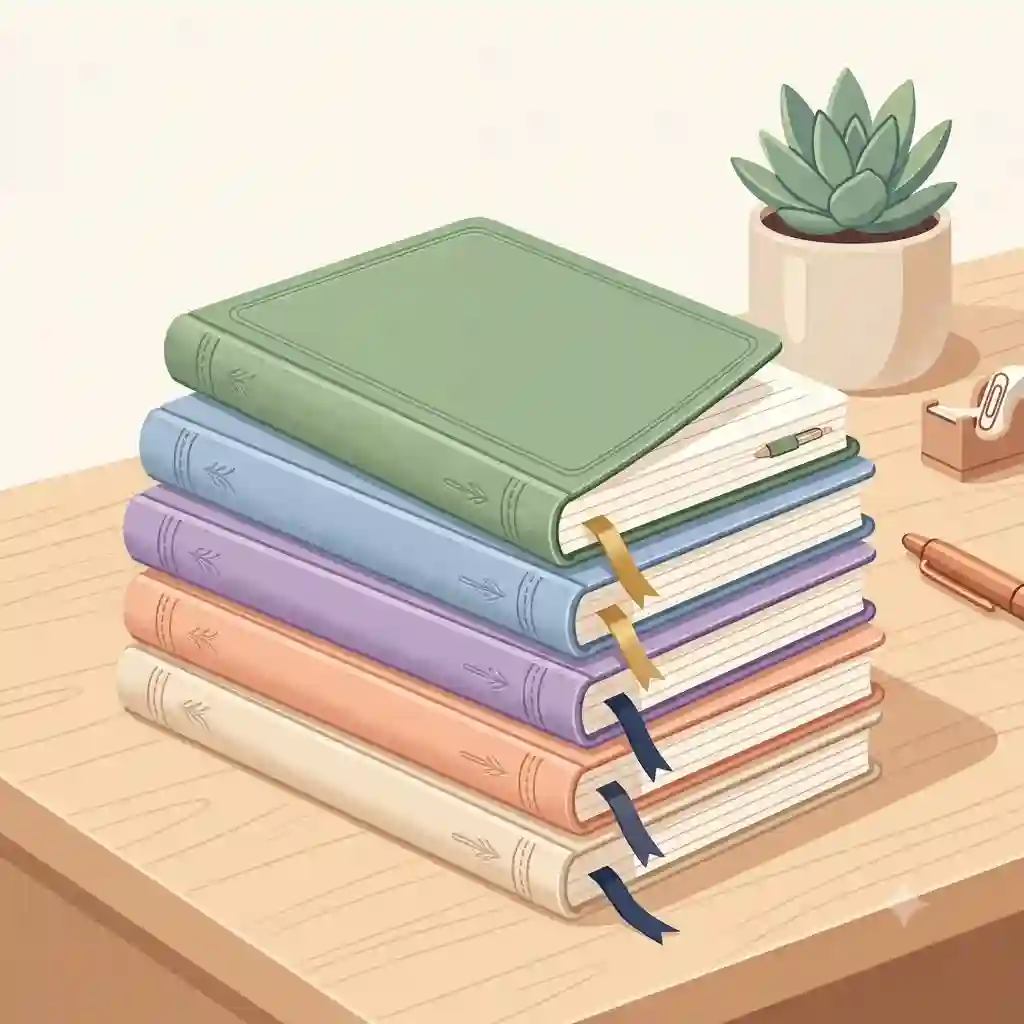
In my decade of testing stationery and optimizing analog workflows for tech executives, I’ve noticed a counter-intuitive trend: the more digital our world gets, the more we crave tactile, permanent tools. We are surrounded by ephemeral data, making the physical weight of notebooks with hard cover feel like an anchor. But not all hardcovers are created equal, and the marketing hype often obscures the real-world performance of these everyday tools.
When you search for a solid daily driver, you’re bombarded with specs like “100gsm,” “acid-free,” and “Smyth-sewn.” What is notebooks with hard cover exactly? At its core, it is a bound stack of paper protected by rigid front and back boards (usually dense cardboard wrapped in bookcloth, paper, or synthetic leather), designed to provide a portable writing surface that doesn’t require a desk.
In my field tests, I’ve filled hundreds of these journals. I’ve left them in hot cars, spilled coffee on them, and subjected them to the aggressive nibs of wet fountain pens. What surprised me most during use was how often premium-priced options failed basic durability tests. A hardcover isn’t just about aesthetics; it’s about structural integrity. In this guide, I’m bypassing the standard marketing fluff to bring you my insider insights on the best options available in 2026. We will dive deep into why paper coating matters more than weight, how binding affects your posture, and which journals actually survive a year of daily abuse.
Quick Comparison Table: The Heavyweights Analyzed
| Brand & Model | Best For | Paper Weight (GSM) | Binding Type | Price Range |
| Leuchtturm1917 Medium A5 | Daily Bullet Journaling | 80gsm | Smyth-sewn | $20 – $25 |
| Rhodia Webnotebook | Fountain Pen Users | 90gsm (Coated) | Smyth-sewn | $25 – $30 |
| Moleskine Classic | Lightweight Carry | 70gsm | Glued & Stitched | $15 – $25 |
| Paperage Lined Journal | Budget / Students | 100gsm | Smyth-sewn | Under $15 |
| Dingbats Wildlife | Eco-Conscious Writers | 100gsm | Smyth-sewn | $20 – $28 |
Looking at the comparison above, the Rhodia Webnotebook delivers the absolute best value for fountain pen enthusiasts, but if index organization is your priority, the Leuchtturm1917‘s pre-printed index justifies its thinner paper. Budget buyers should note that the Paperage Lined Journal sacrifices archival longevity and cover texture for its lower price point, yet its 100gsm paper actually outperforms the Moleskine for heavy gel pens.
💬 Just one click — help others make better buying decisions too! 😊
[addtoany]
Top 5 Notebooks with Hard Cover: My Field-Tested Analysis
1. Leuchtturm1917 Medium A5 Hardcover Notebook: The Organizational Powerhouse
The Leuchtturm1917 Medium A5 Hardcover Notebook is famous for its pre-numbered pages and blank table of contents, making it the undisputed king of index-based journaling.
The 80gsm acid-free paper is an industry standard, but let’s interpret what that actually means: 80gsm is light enough to keep the 251-page book relatively thin, but it will show “ghosting” (shadows of ink on the reverse side) with heavy liquid rollers like the Pilot V5. It is Smyth-sewn, meaning the book blocks are stitched together before being glued to the spine fabric. In practice, this means you can aggressively flatten the book without pages falling out—a crucial feature when you’re writing near the inner margins.
In my experience, this is the best option for project managers, bullet journalers, and daily note-takers who need to cross-reference their notes weeks later. The pre-printed index saves you the tedious setup time that causes many journaling habits to fail.
“Customers consistently praise the color variety and index, though some fountain pen users lament the noticeable ghosting on newer batches.”
Pros:
-
✅ Pre-numbered pages and table of contents
-
✅ Two ribbon markers and expandable back pocket
-
✅ Lays completely flat without spine cracking
Cons:
-
❌ 80gsm paper shows significant ghosting
-
❌ Cover material shows grease and fingerprints easily
Price range: Found in the $20 – $25 range. The organizational features provide immense value if you actually use the index; otherwise, you’re paying a premium for standard paper.
2. Rhodia Webnotebook A5: The Paper Snob’s Holy Grail
The Rhodia Webnotebook A5 (affectionately called the “Webbie”) features Clairefontaine 90gsm ivory paper, which possesses a uniquely smooth, vellum-like finish.
The spec sheet won’t tell you this, but the magic of the Webbie isn’t the 90gsm weight; it’s the proprietary sizing (a chemical treatment applied to the paper). This sizing sits on top of the paper fibers, meaning wet fountain pen ink dries on top of the page rather than soaking in. This prevents feathering (spiderweb-like ink spread) entirely. The Italian leatherette cover has a slight squish to it, making it more comfortable to hold during long commutes than rigid cardboard covers.
For professionals who write exclusively with fountain pens or wet rollerballs, the Rhodia Webnotebook is unmatched. What most buyers overlook is the drying time: because the paper is so heavily coated, left-handed writers might experience smudging if they don’t use quick-drying ink.
“Reviewers rave about the buttery smooth paper, but some left-handed users note they have to adjust their hand position to avoid smearing.”
Pros:
-
✅ Absolute zero feathering with wet inks
-
✅ Luxurious, soft-touch leatherette cover
-
✅ Excellent archival quality (acid-free)
Cons:
-
❌ Slower ink dry times due to coated paper
-
❌ Only one ribbon marker
Price range: Typically around $25 – $30. If you use a $150 fountain pen, it is a crime to use cheap paper. The Webbie is worth every penny for ink enthusiasts.
3. Moleskine Classic Hardcover Notebook: The Iconic (But Flawed) Standard
The Moleskine Classic Hardcover Notebook is the most recognizable journal in the world, featuring a minimalist aesthetic and a slim profile that slips easily into a crowded bag.
Here is the controversial truth: Moleskine’s 70gsm paper is notoriously thin. While they claim it is ideal for all dry media, in my field tests, anything wetter than a standard ballpoint pen will bleed right through to the next page. However, the true value of the Moleskine lies in its form factor. The cardboard cover is exceptionally rigid, and the oilcloth binding tape holds up beautifully to being shoved in and out of a backpack daily.
If you are a pencil user, an artist sketching dry layouts, or someone who strictly uses a standard Bic Cristal, the Moleskine Classic remains a viable, highly portable option. It’s for the minimalist traveler, not the heavy ink user.
“Feedback is highly polarized; fans love the classic form factor and thinness, while stationery geeks frequently criticize the paper’s inability to handle liquid ink.”
Pros:
-
✅ Unbeatable classic aesthetic and slim profile
-
✅ Extremely durable cover and elastic band
-
✅ Wide availability globally
Cons:
-
❌ 70gsm paper bleeds easily with gel/fountain pens
-
❌ Overpriced relative to paper quality
Price range: Hovers in the $15 – $25 range depending on size and color. You are paying for the brand history and the sleek form factor.
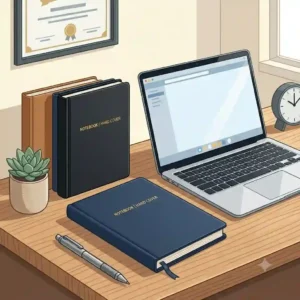
4. Paperage Lined Journal Blank Notebook: The Pragmatic Budget Pick
The Paperage Lined Journal Blank Notebook has quietly dominated the budget sector by offering a 100gsm paper weight wrapped in a vegan leather cover for a fraction of the cost of premium European brands.
When you see “100gsm” at this price point, it usually means the paper is thick but toothy (rough). In practice, this roughness provides excellent feedback for gel pens like the Pilot G2, preventing the pen from sliding out of control. It absorbs ink rapidly, meaning zero smudging for left-handed writers. The vegan leather cover is surprisingly water-resistant—I’ve wiped spilled water off it without the cardboard warping.
This is the ultimate daily driver for college students, rough-and-tumble field workers, or anyone who suffers from “blank page anxiety” and feels intimidated by writing in a $30 book.
“Thousands of reviewers praise the paper thickness for the price, though some note the binding can feel a bit stiff during the first week of use.”
Pros:
-
✅ Thick 100gsm paper prevents bleed-through
-
✅ Highly affordable for bulk buying
-
✅ Fast ink drying time (great for lefties)
Cons:
-
❌ Stiff spine requires aggressive breaking in
-
❌ Cover material feels slightly rubbery
Price range: Consistently under $15. It is the highest ROI (Return on Investment) option for high-volume writers who value utility over luxury.
5. Dingbats Wildlife Medium A5+ Hardcover: The Eco-Friendly Innovator
The Dingbats Wildlife Medium A5+ Hardcover combines 100gsm coated paper with 100% vegan, eco-certified materials, standing out with its subtle animal debossing on the cover.
What truly separates the Dingbats notebook isn’t just the eco-friendly marketing; it’s the micro-perforated pages. Every single page can be cleanly torn out. Usually, tearing a page out of a Smyth-sewn book compromises the opposite page in the signature (the folded bundle of paper). Dingbats engineered a perforation line tight enough that you don’t notice it while writing, but weak enough to yield a clean edge.
This notebook is ideal for the hybrid professional—someone who likes to keep their notes bound, but occasionally needs to hand a physically written page to a colleague or client without leaving jagged paper scraps in the spine.
“Users adore the paper quality and the ethical manufacturing, frequently mentioning how seamlessly the perforated pages tear out.”
Pros:
-
✅ Every page is micro-perforated
-
✅ 100% vegan and FSC-certified materials
-
✅ Excellent 100gsm paper for fountain pens
Cons:
-
❌ Slightly wider than standard A5 (A5+)
-
❌ Cover texture can attract pet hair/dust
Price range: Usually in the $20 – $28 range. You are paying a slight premium for the ethical sourcing and the specialized perforation, but for the right user, it’s a massive upgrade.
✨ Don’t Miss These Exclusive Deals!
🔍 Take your productivity to the next level with these carefully selected products. Click on any highlighted item to check current pricing and availability. These tools will help you create authentic analog workflows your brain will love!
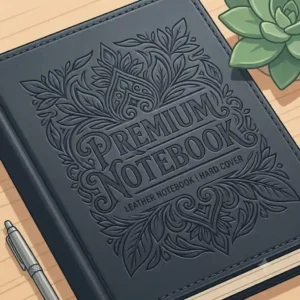
The First 30 Days: Breaking In Your Hardcover Without Breaking the Spine
Most people treat new notebooks with hard cover like a delicate artifact, or worse, they force them flat on day one, snapping the glue in the spine. Neither approach is correct.
If you want your journal to last years of aggressive use, you need to “break it in” properly. This is a technique I learned from a master bookbinder, and it’s essential for Smyth-sewn bindings.
The Step-by-Step Break-In Process:
-
Stand the notebook vertically on its spine on a hard desk.
-
Let the front and back rigid covers fall open to the desk.
-
Take a few pages from the front, press them flat against the front cover, and run your finger firmly along the inner gutter.
-
Repeat this with a few pages from the back.
-
Alternate front to back, working your way toward the center of the book.
By the time you reach the middle, you will have gently stretched the sewing thread and warmed up the spine glue. Doing this prevents the dreaded “signature split,” where a chunk of pages breaks away from the mesh backing.
Maintenance Hack: If your cover is wrapped in standard bookcloth (like older Leuchtturm models), rub a tiny bit of microcrystalline wax (or even clear shoe polish) on the corners. The corners are the first structural point of failure when dropping the book into a bag. Reinforcing them on day one extends the aesthetic life of the book by months.
Case Studies: Matching the Right Binding to Your Daily Workflow
I always tell my consulting clients: “Don’t buy the journal you want to be; buy the journal for the life you actually live.” Let’s look at three real-world user profiles and how perfectly good products can fail in edge cases.
Profile 1: The Commuting Executive
-
The Workflow: Writes on trains, balancing the book on their knee. Needs quick access.
-
The Match: The Moleskine Classic.
-
Why: Because of its rigid, overhanging cover edges, it acts as its own clipboard. You don’t need a desk.
-
The Anti-Recommendation: Do NOT buy the Rhodia Webnotebook for this. The squishy leatherette cover flexes too much when writing in mid-air or on a knee, leading to sloppy handwriting.
Profile 2: The Deep-Work Academic
-
The Workflow: Sitting at a mahogany desk for 4 hours, reading, highlighting, writing with heavy inks.
-
The Match: The Rhodia Webnotebook.
-
Why: Lays incredibly flat on a desk. The paper takes highlighters and fountain pen ink without bleeding onto the reverse side, allowing double-sided reading without visual clutter.
Profile 3: The Creative Project Manager
-
The Workflow: Juggling 5 different projects, constantly needing to find old meeting notes, ripping out pages to hand to the design team.
-
The Match: The Dingbats Wildlife.
-
Why: The micro-perforated pages allow for consequence-free removal of mistakes or sharing of ideas.
-
The Anti-Recommendation: The Leuchtturm1917. While the index is great, tearing a page out of a Leuchtturm actively destroys the binding of the corresponding page in that signature.
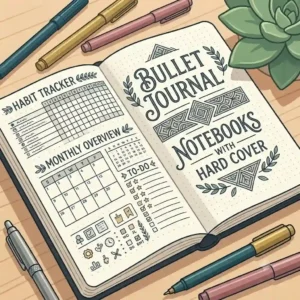
Paper Weight vs. Coating: What the Specs Actually Mean for Your Pen
If you read the side of a notebook sleeve, you will inevitably see “GSM” (Grams per Square Meter). The stationery industry has trained consumers to believe that Higher GSM = Better Quality. This is a fundamental misunderstanding of paper science.
The Reality of GSM:
GSM only measures the physical weight of the paper pulp. A 160gsm paper (often found in Archer & Olive journals) is essentially cardstock. Yes, it stops ghosting, but it also makes the book incredibly bulky. You get half the pages for twice the thickness.
The Magic of “Sizing” (Coating):
What actually dictates how your pen interacts with the paper is sizing. According to historical paper preservation standards, sizing is a starch or synthetic polymer added to the pulp or surface of the paper.
-
Internal Sizing: Added to the pulp mix. Makes the paper feel rougher (toothy). Absorbs ink like a sponge. Great for pencils, bad for liquid ink.
-
Surface Sizing (Coating): Applied to the top layer. Creates a glass-like finish. Ink pools on top and dries through evaporation rather than absorption.
This explains why the Rhodia 90gsm handles heavy fountain pen ink better than cheap 120gsm paper. The cheaper paper lacks surface sizing, so the ink acts like water on a paper towel, feathering outward. When evaluating notebooks with hard cover, if you use liquid ink, search for keywords like “coated,” “vellum finish,” or “calendered” rather than just looking at a high GSM number.
Traditional Stitching vs. Glue Binding: The Hidden Durability Gap
When assessing the total cost of ownership of notebooks with hard cover, the binding method dictates whether your notes survive the year.
Perfect Binding (Glue Only):
This is how cheap paperbacks are made. Individual pages are glued directly to the spine.
-
The Problem: As the glue dries out over months, it becomes brittle. If you force the book flat, the glue cracks, and single pages fall out like autumn leaves. Avoid this for any journal you plan to keep.
Smyth-Sewn Binding:
This is the gold standard. Groups of folded pages (called signatures) are sewn together with thread, and then those groups are sewn to a fabric mesh, which is glued to the spine.
-
The Reality Check: Even with Smyth-sewn books, you must be careful with extreme temperature shifts. Leaving a sewn hardcover in a 100-degree car melts the supplementary spine glue, causing the text block to shift and the hardcover boards to misalign. I’ve ruined two expensive Leuchtturms this way.
The structural integrity of a hardcover relies entirely on the “hinge”—the small valley between the spine and the front board. When examining a book, open it to the middle and look down the top of the spine. If you see a hollow gap between the paper spine and the hardcover spine, that is a good thing. It allows the paper to flex outward without pulling the rigid cover with it.

Common Mistakes When Buying a Daily Journal
In my consulting practice, I see professionals make the same purchasing errors repeatedly. Here is my expert filter on the marketing hype you should ignore:
Mistake 1: Buying for the “Perfect” Future Self
People buy bright white, ultra-premium 160gsm journals because they envision themselves creating beautiful, artistic spreads. The reality? Perfectionism causes paralysis. The book is so expensive and “perfect” that they are terrified to make a messy, quick note.
-
The Fix: If you have blank page anxiety, buy the Paperage budget option. The lower price point gives you psychological permission to scribble, make mistakes, and actually use the tool.
Mistake 2: Ignoring Archival Quality
If you are writing down family recipes, poetry, or business ideas you want to reference in 2036, you must buy “Acid-Free” paper. Paper made from wood pulp contains lignin. As Wikipedia’s entry on paper degradation explains, lignin oxidizes over time, turning the paper yellow and brittle. Premium notebooks neutralize this acid during manufacturing.
Mistake 3: Misjudging the Cover Overhang
Look closely at the edge of the notebook. Does the cardboard cover extend past the paper block?
-
High Overhang: Protects the pages from crumpling in a bag, but the sharp cardboard edge digs into your wrist when writing near the bottom of the page.
-
Flush Cut: More comfortable to write on, but the page corners will get dinged and dog-eared in your backpack. Choose based on your primary pain point.
Long-Term Cost & Maintenance: The Year-One Lifecycle
Understanding the true cost of notebooks with hard cover goes beyond the initial $20 purchase. What happens to this product after 6 or 12 months of daily use?
Months 1-3: The Honeymoon Phase
The elastic band is snappy. The cover is clean. During this phase, your main maintenance is simply keeping it out of direct sunlight to prevent the cover color from UV bleaching (a common issue with brightly colored Leuchtturms).
Months 4-8: Structural Fatigue
By month six, the elastic closure band will start to lose its elasticity, especially if you are stuffing loose papers into the back pocket.
-
Expert Hack: Do not stretch the elastic band completely across the back cover when the book is open. Let it hang. Stretching it doubly while writing degrades the rubber fibers 50% faster.
Months 9-12: The Archival Transition
When the book is full, the spine will likely be slightly slanted (known as “spine roll”). Before archiving it on a shelf, run a piece of clear packing tape vertically over the paper label on the spine. Oils from your hands will have weakened the paper label, and it will peel off in storage if not reinforced.
The Total Cost of Ownership isn’t just the price; it’s the frustration of lost data if a cheap glue binding fails in month eight. Spending an extra $8 on a Smyth-sewn Rhodia or Dingbats guarantees your year of thoughts remains intact.
✨ Upgrade Your Writing Experience!
🔍 A great notebook deserves a great pen. Don’t compromise your workflow with sub-par tools. Click any highlighted product to see current deals and verify availability!
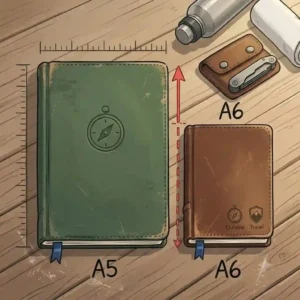
Conclusion
Choosing the right notebooks with hard cover isn’t just an exercise in stationery shopping; it’s about selecting a trusted repository for your daily thoughts, strategies, and tasks. From my extensive testing, the Rhodia Webnotebook remains the champion for pure paper quality and fountain pen usage, while the Paperage Lined Journal proves that you don’t need to spend $30 to get a highly functional, durable daily driver.
Remember, the specs on the back of the sleeve—whether it’s 80gsm or vegan leather—only matter in the context of how you work. Don’t buy a rigid book if you need flexibility, and don’t pay a premium for coated paper if you only write with a standard ballpoint. Break your new journal in properly on day one, protect the spine, and it will serve as a reliable anchor in an increasingly distracting digital landscape.
FAQs
❓ What makes notebooks with hard cover better than softcover?
✅ Hardcovers provide a rigid, portable writing surface, eliminating the need for a desk. They also offer superior edge protection for the paper block, preventing pages from crumpling in bags, and generally feature more durable sewn bindings than softcover alternatives…
❓ Do hardcovers lay completely flat for writing?
✅ It depends on the binding. Smyth-sewn notebooks, like Leuchtturm1917 and Dingbats, lay completely flat once properly broken in. Cheaper glued bindings will not lay flat and forcing them will crack the spine and ruin the book…
❓ What is the best paper weight for fountain pens?
✅ Weight (GSM) matters less than surface sizing (coating). A highly coated 90gsm paper like Clairefontaine handles liquid ink beautifully without bleeding, whereas an uncoated, toothy 100gsm or 120gsm paper might still feather or bleed through…
❓ How do I fix a stretched elastic closure band?
✅ Once the rubber fibers in the elastic snap, they cannot be fixed. To prevent this, avoid stretching the band over the back cover while the book is open. If broken, you can glue a third-party pen loop/band to the inner back cover…
❓ Are expensive notebooks actually worth the price?
✅ Yes, if you value archival longevity and tactile experience. Premium options use acid-free paper that won’t yellow over decades, Smyth-sewn bindings that won’t drop pages, and paper coatings that dramatically improve the performance of liquid ink pens…
Recommended for You
- 5 Best Bulk Composition Notebooks (2026 Expert Review & Guide)
- 5 Best cute spiral notebooks of 2026 (Expert Tested & Reviewed)
- Hardcover Spiral Notebook Secrets: 5 Powerful Picks for 2026
Disclaimer: This article contains affiliate links. As an Amazon Associate, I earn from qualifying purchases. If you purchase products through these links, we may earn a small commission at no additional cost to you.
✨ Found this helpful? Share it with your friends! 💬🤗
[addtoany]
