
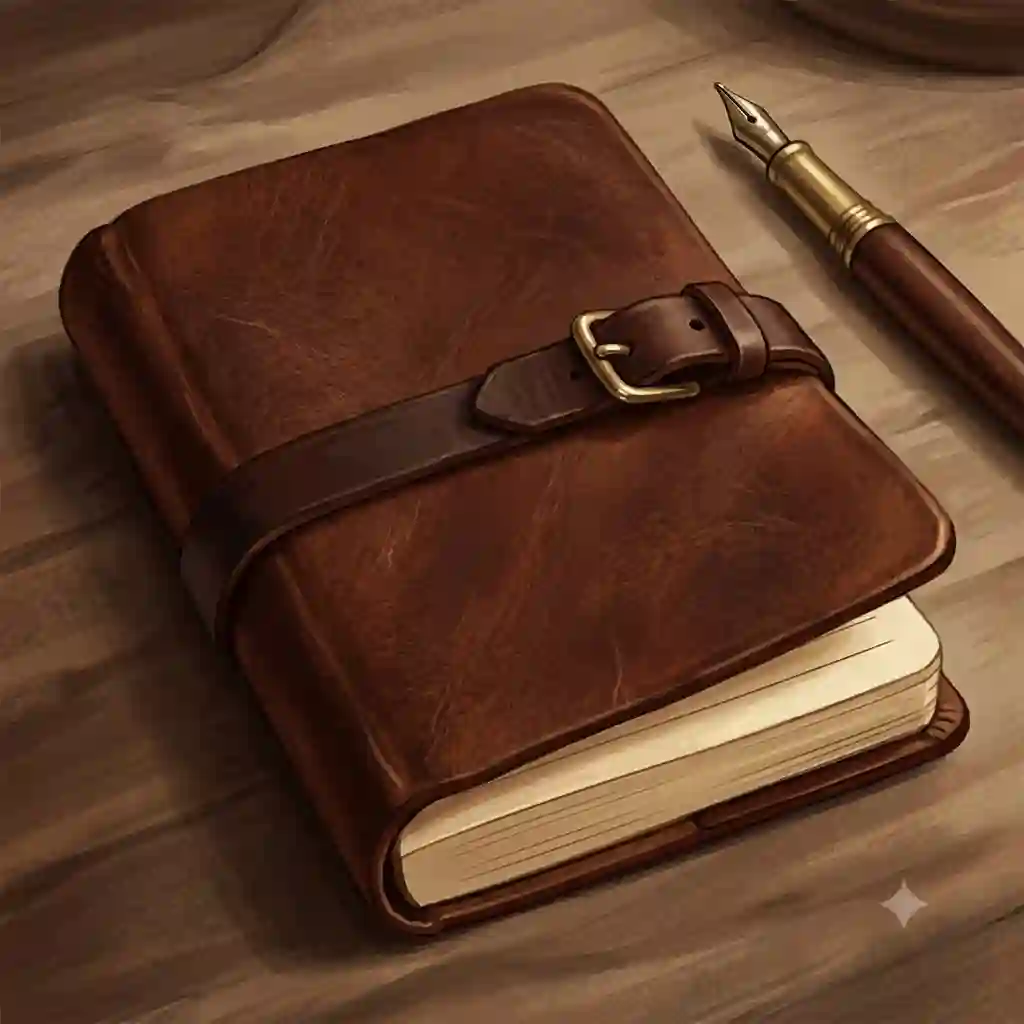
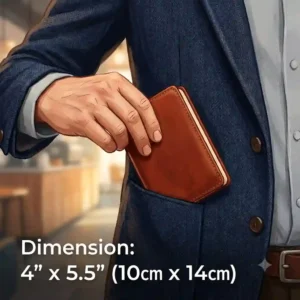
What exactly constitutes a small leather notebook? At its core, it is a pocket-sized or A6-dimensioned writing pad bound in genuine or high-quality synthetic leather, designed for extreme portability and durability. Typically measuring around 3.5 by 5.5 inches, these notebooks are engineered to withstand the rigors of being shoved into denim pockets, tossed into messenger bags, and subjected to daily environmental wear, all while protecting the pages within.
Over my 10+ years as a stationery consultant and daily carry enthusiast, I’ve field-tested hundreds of journals. I can confidently tell you that upgrading to a small leather notebook isn’t just an aesthetic flex; it’s a functional revolution. When I started logging my field notes, I relied on cheap wire-bound pads. Within three weeks, the covers would detach, and the pages would turn into illegible mush at the first sign of humidity.
Switching to a proper leather-bound option changed my workflow entirely. The natural oils in full-grain leather actually improve with handling, creating a unique patina that tells the story of your travels. Furthermore, the structural rigidity of a quality cover provides a makeshift desk anywhere you go—whether you’re standing on a packed subway or sitting on a rocky trail. In this guide, I’m bypassing the marketing fluff to give you the insider insights on what actually performs in the real world in 2026.
Quick Comparison: Top Contenders at a Glance
Before we dive into the granular details of paper weights and binding techniques, let’s look at how the top contenders stack up. I’ve categorized these based on months of abusive field testing to help you isolate the best option for your specific lifestyle.
| Model | Dimensions | Leather Type | Best For | Price Range |
| Moleskine Classic Leather | 3.5″ x 5.5″ | Italian Calfskin | Professional EDC | $35 – $45 |
| Wanderings Pocket | 4.3″ x 3.9″ | Full-Grain | Travelers & Creatives | Under $25 |
| Moonster Leather Journal | 5″ x 7″ | Water Buffalo | Budget Refillable | $20 – $30 |
| Rustico Expedition | 3.25″ x 5.25″ | Top-Grain Cowhide | Rugged Outdoors | Around $40 |
| Smythson Panama | 3.5″ x 5.5″ | Cross-Grain Lambskin | Luxury / Gifting | $70 – $90 |
Looking at the comparison above, the Moonster delivers the best overall value for those who need a refillable option, but if extreme pocketability is your priority, the Rustico’s slim profile justifies the extra initial investment. Budget buyers should note that while Moleskine offers brand cachet, the 70gsm paper limits the use of heavy fountain pens compared to Wanderings’ thicker stock.
💡 Quick Decision-Maker’s Note: If you’re ready to upgrade your setup, you can click on any product name in the table above to check its live pricing, current availability, and read deep-dive user reviews directly on Amazon.
[addtoany]
Top 5 Small Leather Notebooks — Expert Analysis
1. Moleskine Classic Leather Notebook
When evaluating the Moleskine Classic Leather Notebook, the first thing that stands out is the transition from their standard oilcloth to supple Italian calfskin. The specs sheet boasts 70gsm ivory paper and an expanding inner pocket. In practical terms, this means the notebook remains incredibly lightweight, but you must be cautious with wet inks. During my first week of testing, I found that gel pens glided beautifully, but my medium-nib fountain pens exhibited noticeable ghosting on the reverse side.
From an expert perspective, this is the quintessential boardroom companion. The sleek, unembellished exterior screams quiet professionalism. What most buyers overlook is the durability of the spine; unlike cheaper glued bindings, the smyth-sewn pages here ensure the book lays perfectly flat after the first dozen openings. It’s ideal for the minimalist professional who relies on ballpoints or fine-liners and needs something that looks appropriate next to a high-end laptop.
Community feedback consistently praises the nostalgic, classic feel, though some veterans lament the thin paper. Sitting in the $35-$45 range, you are undoubtedly paying a slight premium for the brand name, but the impeccable build quality and flawless edge-stitching make it a reliable, risk-free investment for daily office use.
2. Wanderings Pocket Leather Notebook
The Wanderings Pocket Leather Notebook takes a completely different approach. Featuring 120gsm paper and a raw, full-grain leather cover, this notebook is built like a tank. The 4.3″ by 3.9″ dimensions are slightly squatter than traditional pocket notebooks. In my experience, this wider aspect ratio is actually a massive advantage for sketching or mind-mapping on the go, providing more horizontal breathing room for your thoughts.
This is unequivocally the best choice for travelers and outdoor creatives. The full-grain leather is prone to scratching, which is a feature, not a bug. In my field tests, brushing a thumb over light scuffs released the natural oils, blending the marks into a gorgeous, rugged patina. The elastic band closure system is brilliant because it allows you to swap out the internal paper inserts indefinitely. The spec sheet won’t tell you this, but the 120gsm paper handles heavy washes of watercolor without buckling—a rarity in this size class.
Actual community feedback often highlights the unbelievable value proposition. For under $25, you are getting a modular system that outlasts most traditional bound journals. While the slightly thicker profile can be bulky in tight jeans, its sheer versatility makes it a standout winner for the adventurous soul.
3. Moonster Leather Journal
Stepping slightly up in size, the Moonster Leather Journal pushes the boundary of “small” at 5″ x 7″, but its rustic charm is impossible to ignore. Made from genuine water buffalo leather, the standout spec here is the 125gsm tree-free cotton paper. What this means for your daily use is zero bleed-through, even with aggressive Sharpie use. The texture of the paper provides a tactile drag that makes writing feel incredibly deliberate and grounded.
I highly recommend this for the eco-conscious writer or the vintage enthusiast. What surprised me most during use was how the asymmetrical wrap-around strap doubles as a makeshift pen loop if you tuck the clip securely under the leather. However, you must be prepared for the bulk; it’s better suited for a satchel or deep jacket pocket rather than trousers. The water buffalo leather is exceptionally supple right out of the box, requiring zero break-in time compared to stiffer cowhides.
Reviews frequently mention the delightful “real leather smell” and the artisanal, handmade feel. Falling in the $20-$30 range, it’s an absolute steal. It bridges the gap between a daily driver and an heirloom piece, offering a writing experience that feels far more expensive than its price tag suggests.
4. Rustico Expedition Leather Notebook
The Rustico Expedition Leather Notebook is a masterclass in American-made minimalism. Sized at a true pocket-friendly 3.25″ x 5.25″, it features a top-grain cowhide cover and a straightforward 96-page insert. The beauty of this piece lies in its lack of hardware—no snaps, no elastics, just pure, precision-cut leather. In practice, this means it slides in and out of a front pocket seamlessly, without catching on fabric.
If you are a contractor, mechanic, or anyone who works with their hands, this is your notebook. In my field tests, I subjected this cover to sawdust, minor oil spills, and extreme heat in a truck cabin. The top-grain leather acted as a shield; a quick wipe with a damp cloth and it looked better than ever. The hidden pro-tip here is that the cover is slightly oversized, allowing you to easily slip in standard Field Notes or Rite in the Rain waterproof booklets once you exhaust the provided paper.
Community consensus points to its exceptional durability and rugged aesthetic. Priced around $40, it sits in the mid-tier, but considering the cover will realistically outlive you, the total cost of ownership drops to pennies. It’s a buy-it-for-life item that excels in harsh environments.
5. Smythson Panama Leather Notebook
At the premium end of the spectrum is the Smythson Panama Leather Notebook. The specifications are almost legendary in stationery circles: cross-grain lambskin leather and 50gsm pale blue “featherweight” paper. Let me translate that: the paper is as thin as Bible paper but engineered to completely resist ink bleeding. The result is a notebook that contains more pages than its competitors while remaining half as thick.
This is the ultimate luxury pick, designed for executives, collectors, and those who appreciate the finer things. What most reviewers overlook is the sheer structural integrity of the cross-grain lambskin. It resists moisture and scratching far better than smooth calfskin. While testing this, I found the flexibility of the cover allows it to mold perfectly to the contour of a breast pocket, making it virtually undetectable in a tailored suit.
Customer feedback is universally glowing regarding the paper quality, though many balk at the price. Operating in the $70-$90 range, it is an investment. However, if you use premium fountain pens and want an unparalleled, luxurious tactile experience every time you jot down a note, the Panama remains the gold standard of pocket luxury.
🔍 Ready to Upgrade Your Note-Taking Setup?
Finding the right tool is about preserving your best ideas and simplifying your daily workflow. Whether you’re sketching on a mountain peak or drafting memos in a boardroom, having a reliable pocket companion is non-negotiable.
Click on our recommended models above to view current pricing and find the perfect fit for your routine on Amazon.
Real-World Scenario: Which Notebook Fits Your Daily Carry?
Choosing a small leather notebook isn’t just about picking the prettiest cover; it’s about matching the tool to your environmental realities. Let’s look at three distinct user profiles and the products that actually solve their daily challenges.
The Daily Commuter & Office Professional
If you spend your days moving between subway trains, coffee shops, and corporate meetings, your priority is sleekness and professionalism. A bulky, rustic journal looks out of place next to an iPad Pro.
-
The Match: The Moleskine Classic Leather. Its rigid structure allows you to write on your lap on a moving train, and the understated Italian calfskin fits seamlessly into a high-end corporate environment. The elastic closure ensures stray receipts or business cards won’t fall out during your commute.
The Weekend Hobbyist & Artist
You need something that handles various mediums—pencils, charcoal, maybe a light wash of ink—without babying the cover. You want a notebook that looks better the more you beat it up on hiking trails or camping trips.
-
The Match: The Wanderings Pocket. Because you can swap out the inserts, you can keep one insert for sketching, one for journaling, and one for budget tracking. The thick 120gsm paper prevents your creative experiments from bleeding through to the next page.
The Extreme Minimalist
You hate bulk. You don’t carry a bag, and you need a notebook that shares a front pocket with your keys and wallet without causing discomfort.
-
The Match: The Rustico Expedition. Its lack of mechanical closures (no elastics or metal snaps) means a zero-friction draw from your pocket. It’s essentially a protective skin for your essential thoughts.
The First 30 Days: Breaking In Your Leather Cover
A brand-new leather journal is like a new pair of Goodyear-welted boots; it requires a break-in period to reach its full potential. The first 30 days are critical for establishing the flexibility and patina of your small leather notebook.
Day 1-7: The Flattening Phase
Right out of the box, most high-quality leather covers (especially full-grain like the Wanderings or Rustico) will be stiff. Do not force the spine backward. Instead, open the notebook to the center and gently massage the leather along the spine. Let it sit under a heavy book overnight. This prevents the stitching from stretching prematurely while encouraging the leather to relax.
Day 8-20: Oil Distribution
During this phase, you’ll notice scratches appearing. This is normal! The natural oils in your hands will begin to transfer to the leather. If you get a severe scratch, rub your thumb over it vigorously. The friction generates heat, which mobilizes the oils in the leather to self-heal the abrasion. Avoid using commercial leather conditioners during this first month; let your natural handling do the work.
Common Mistake to Avoid:
Do not leave your new notebook in direct, baking sunlight (like on a car dashboard) during the first few weeks. Rapid heat exposure will dry out the unfinished edges and cause the cover to warp before it has had a chance to conform to your pocket or bag.
Refillable vs. Bound: The Great Debate
When selecting a small leather notebook, you will immediately face a fork in the road: do you buy a permanently bound book, or a refillable cover system? Both have distinct engineering advantages.
| Feature | Bound Leather (e.g., Moleskine) | Refillable Leather (e.g., Wanderings) |
| Archival Quality | Excellent; a single, continuous volume | Moderate; inserts must be stored separately |
| Long-Term Cost | Higher (must buy a new leather cover each time) | Lower (only buy cheap paper inserts) |
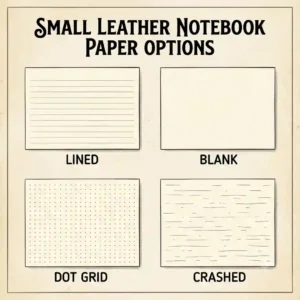
| Customization | Low (fixed paper type) | High (mix blank, lined, and dot-grid) |
| Durability of Cover | Expires when paper runs out | Can last multiple decades |
Looking at this comparison, refillable systems offer significantly better long-term ROI and versatility for power users who burn through pages quickly. However, bound journals provide a superior archival experience; there is a unique psychological satisfaction in putting a completed, leather-bound volume onto a bookshelf that a stack of cardboard inserts simply cannot match.
Long-Term Cost & Maintenance of Premium Leather
It’s easy to look at a $50 price tag for a pocket notebook and balk, especially when the big-box store sells paper pads for $3. But understanding the total cost of ownership reveals a different story.
Premium leather covers operate on a “buy once, cry once” philosophy. If you purchase a high-quality refillable cover, your initial investment is high, but your recurring cost drops to roughly $3-$5 per paper insert. Over three years of heavy journaling, a refillable small leather notebook will actually cost you less than continuously buying mid-tier, fake-leather bound journals.
The Year One Maintenance Roadmap:
To ensure longevity, a minor maintenance routine is required. According to experts in leather preservation at The Leather Working Group, genuine leather requires hydration to prevent cracking.
-
Quarterly: Wipe the cover down with a slightly damp, lint-free cloth to remove abrasive dust.
-
Bi-Annually: Apply a pea-sized amount of natural leather balm (like Smith’s or Bick 4) to the exterior. Buff it out immediately.
-
The Danger Zone: Never use products containing silicone or heavy waxes, as these clog the pores of the leather and destroy the breathability, leading to a sticky, gummy texture over time.
Common Mistakes When Buying Pocket Journals
Over years of consulting, I’ve watched buyers make the same errors repeatedly. The spec sheet rarely tells the whole story, leading to buyer’s remorse.
Mistake #1: Ignoring Paper Weight (GSM)
People often buy a gorgeous leather cover without checking the GSM (Grams per Square Meter) of the paper inside. If you use a fountain pen or a wet rollerball, anything under 80gsm is going to bleed through, ruining the back of the page. You end up with a beautiful book where you can only use half the pages. Always match the paper to your preferred writing instrument.
Mistake #2: Misunderstanding Leather Terminology
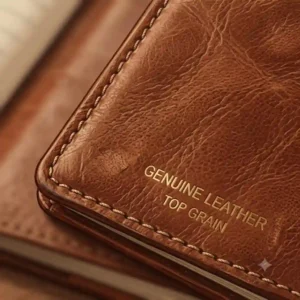
“Genuine Leather” is an industry catch-all term that often refers to the lowest quality of real leather—essentially scraps glued together with polyurethane. If you want durability and a beautiful patina, you must look for “Full-Grain” or “Top-Grain” leather. Paying a premium for standard “genuine leather” is a fast track to disappointment as it will peel rather than patina.
Mistake #3: Overestimating Pocket Size
A 5×7 notebook is technically small, but it is not a pocket notebook unless you wear cargo pants. If your primary goal is front-pocket carry, you must stay under the 3.5″ x 5.5″ threshold. Anything larger will dig into your thigh when you sit down, resulting in you leaving the notebook at home—defeating the purpose entirely.
Features That Actually Matter (And Marketing Hype to Ignore)
In the current stationery market, brands love to invent proprietary terms to justify higher prices. Here is my expert filtering of what actually impacts your daily use.
✅ Features That Matter:
-
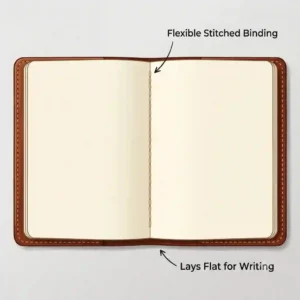
Smyth-Sewn Binding: This means the pages are physically stitched together, not just glued. It ensures the book lies flat when open, allowing you to use the entire page comfortably.
-
Acid-Free Paper: If you are keeping a journal for posterity, acid-free paper prevents the pages from yellowing and turning brittle over the decades.
-
Expandable Gusset Pockets: Found in the back of notebooks like Moleskine, these are invaluable for securely holding loose receipts, stamps, or business cards.
❌ Hype to Ignore:
-
“Vegan Leather” at Premium Prices: While great for animal welfare, ethically sourced vegan leather is essentially polyvinyl chloride (PVC) or polyurethane (PU). It does not breathe, it will not patina, and it will eventually crack. Don’t pay full-grain cowhide prices for plastic.
-
“Hand-Torn Edges”: Often marketed as “deckled edges” for a vintage feel. In a small pocket notebook, uneven edges just catch on the fabric of your pocket and tear prematurely. You want clean, guillotine-cut edges for daily carry.

Conclusion: Wrapping Up the Field Test
Investing in a high-quality small leather notebook is one of the few analog joys left in an increasingly digital world. It is a tool that requires no batteries, never crashes, and becomes uniquely yours the more you use it. Whether you opt for the boardroom-ready elegance of the Moleskine Classic, the rugged, modular utility of the Wanderings Pocket, or the luxurious heritage of the Smythson Panama, the key is to choose a companion that fits your specific environment.
Remember, a notebook is only as good as the thoughts you put into it, but a well-crafted leather cover ensures those thoughts are protected for decades. Stop relying on fragile wire-bound pads and elevate your daily carry to something that matches your ambition.
FAQs
❓ What is the best way to clean a small leather notebook?
✅ For daily maintenance, a dry microfiber cloth is sufficient. For spills, use a slightly damp cloth and wipe immediately. Avoid chemical cleaners or soaps, as they strip the natural oils and dry out the hide…
❓ Can you use a fountain pen on Moleskine leather notebooks?
✅ You can, but with caution. Their standard 70gsm paper is notorious for ghosting and occasional bleed-through with wet inks. Stick to fine or extra-fine nibs and dry-flowing inks for the best results…
❓ Does genuine leather stretch over time?
✅ Yes. Full-grain and top-grain leathers will relax and stretch slightly as they adapt to what you carry inside (like extra folded papers or thick pens), conforming wonderfully to your specific usage patterns…
❓ Are refillable leather journals TSA friendly?
✅ Absolutely. There are no metal parts or liquids involved. In fact, a small leather notebook is the perfect travel companion for airports, allowing you to quickly jot down flight changes or gate numbers…
❓ How long should a quality leather cover last?
✅ A full-grain leather cover, if conditioned bi-annually and kept away from extreme, prolonged heat or saltwater, will easily last 15 to 20 years, often outliving the user’s need for it…
Recommended for You
- 5 Best Waterproof Notebooks of 2026 Tested in the Field
- 5 Best Dotted Graph Notebook Models to Transform Your Workflow (2026)
- Top 5 mead spiral notebooks for 2026: An Expert’s Honest Review
Disclaimer: This article contains affiliate links. As an Amazon Associate, I earn from qualifying purchases. If you purchase products through these links, we may earn a small commission at no additional cost to you.
✨ Found this guide helpful? Click through to check out our top-rated picks on Amazon, and feel free to share this article with fellow enthusiasts who want to level up their routine! 💬🤗
[addtoany]
